In the northern hemisphere, many raptor species breeding in North America migrate south in the fall and return north in the spring. Organizations like HawkWatch International (HWI) document these migrations each year at established locations called hawkwatches. This overview map, produced by the Raptor Population Index, displays the hawkwatches located throughout the Americas (real-time count data from these sites can be viewed at the Hawk Migration Association’s page).
Hawkwatches in the Americas monitor outbound (fall) or inbound (spring) migrations. Occasionally, they monitor both. This begs several questions, such as:

- How do fall and spring hawkwatches differ?
- Why are there more fall hawkwatches compared to spring hawkwatches?
- Is one season better than the other for counting hawks for science?
We hope this blog will provide some insight into these and other questions that you may have about the differences between fall and spring hawkwatches.
To help us answer questions like these, it’s important to understand some of the factors that influence raptor migration routes. Following the breeding season, most migratory raptors in North America disperse to non-breeding grounds throughout the mid-latitudes of the United States, Central, and South America. Between February and May, these same individuals return north to the breeding grounds. Some birds may use the same route on both their outbound and inbound journeys. However, count and tracking data indicate that many migrants use different routes. Based strictly on the number of birds counted, data from hawkwatches that run both fall and spring counts typically show larger fall and smaller spring counts.
There are likely a number of drivers at play causing the seasonal variation we see in both route selection by raptors and count volume at hawkwatches. These include a combination of landscape, weather, and individual-specific factors.
Where: Topographical and Geographical
From a continental perspective, the overall hourglass shape of the combination of North America, the Central American isthmus, and South America funnels outbound (fall) migrants from across the broad North American longitude so they converge at well-defined and predictable locations. These broad pathways raptors move along are called flyways, and hawkwatches are often located within these areas.
At the regional scale, within the various flyways, hawkwatch locations are often tied to landscape features, which can serve as leading lines or diversion lines. Leading lines are geographical or topographical features that attract migrants to induce movement, while diversion lines are geographical or topographical features that concentrate raptors as they try to avoid them.

Below is a list of some of the more common landscape features associated with hawkwatches, demonstrated with examples from our own migration network.
- Coastlines
(Corpus Christi HawkWatch) - Deserts
(Goshute Mountains HawkWatch) - Mountain ridges
(Gunsight Mountain and Goshute Mountains HawkWatches) - Lakes
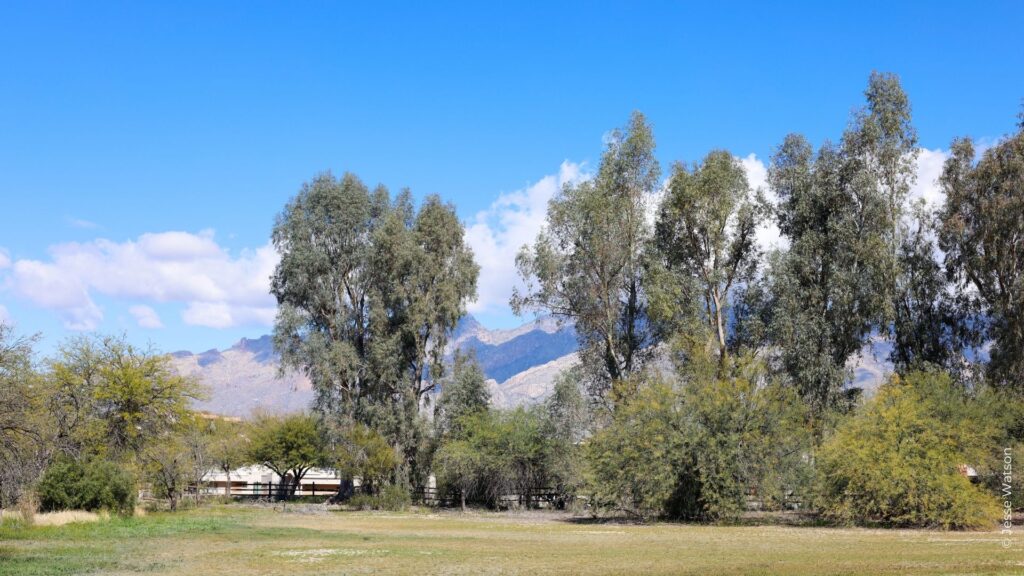
- Rivers (Tubac HawkWatch)
- Habitat boundaries

When: Timing
We tend to think of hawkwatching as a semiannual (fall and spring) phenomena. Within each of these seasonal events, there is variability in fixed factors such as latitude/longitude, the individual’s species, sex, and age. The combination of these variables can influence the timeframe during which certain individuals or a species group migrate through a flyway. See below for a non-exhaustive list of examples demonstrating how variability in certain fixed factors can affect the timing of migration:
Inter-species Differences
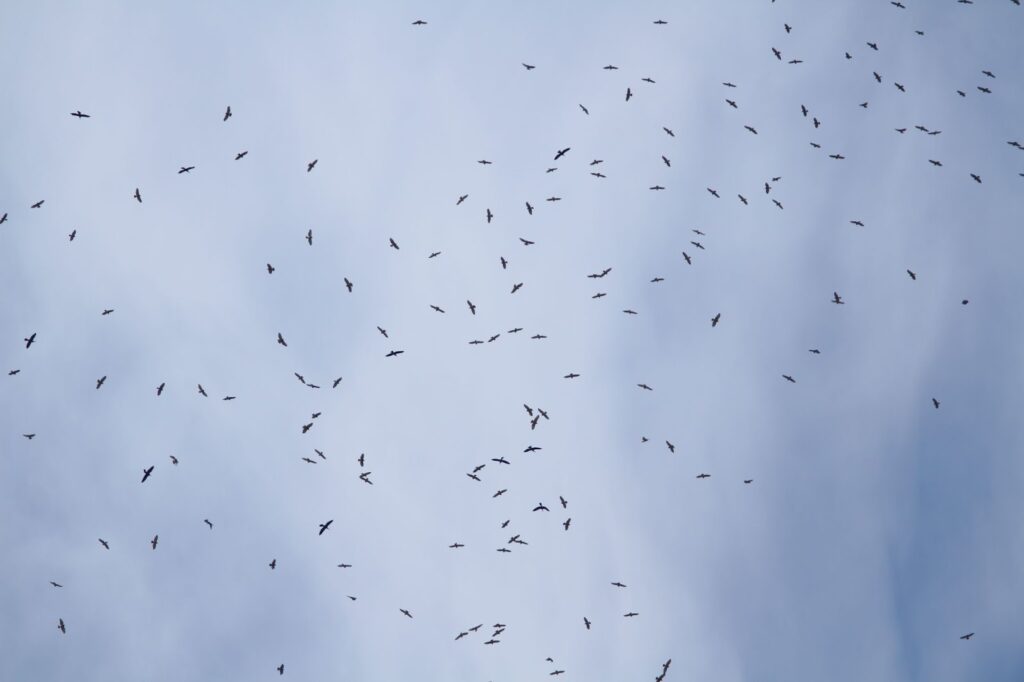
Super flocking, long-distance migrants like Broad-winged Hawk that migrate from the boreal forest in North America to the mid-latitudes in South America generally migrate during predictable timeframes, early in the fall and late in the spring, and exhibit minimal annual variation interannually.
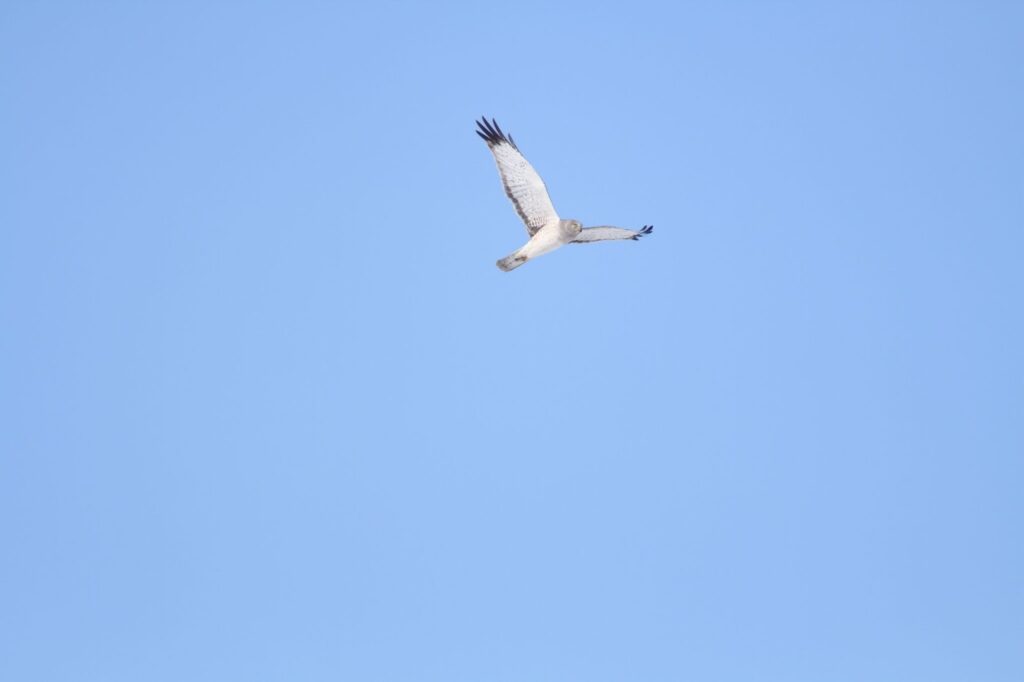
By comparison, solo traveling, shorter-distance migrants like Northern Harrier complete their migration across a broader window within both fall and spring.
Latitude and Longitude
During outbound migration, hawkwatches in the interior west may observe their highest volume of a species before west coast or eastern hawkwatches observe the bulk of the same species due to the early onset of wintry conditions and the need for those birds to find suitable conditions to survive the winter.
Weather
Large movements of migrants are often associated with incoming cold weather fronts. Migrating hawks can also benefit energetically from the wind along leading and diversion lines. Additionally, mid-day increases in air temperature can attract birds to higher altitudes, allowing them to transition from powered-flight to thermal-driven flight.

Variation Among Age and Sex Classes
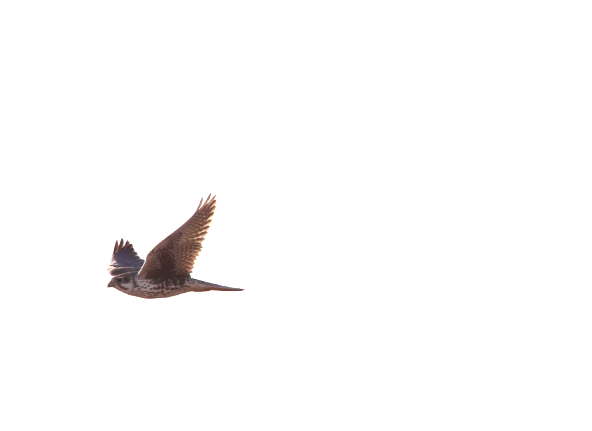
Intra-species comparisons of individuals across age and sex classes can show differential migration, where various individuals migrate at different times and to different locations. For example, we expect to observe the bulk of juvenile Red-tailed Hawks and Golden Eagles up to two weeks before the bulk of the adults in the fall and up to two weeks after the adults in the spring. In certain species, one of the sexes may arrive or migrate before their counterparts.

Connecting the Dots: How we Pick Which Season to Count
The When and Where discussed above comprise a non-comprehensive list of external factors outside of our control affecting the use of various routes by migrating raptors. Now we can answer our original questions focused on the differences between fall and spring migration monitoring.
How do fall and spring hawkwatches differ, and why are there more fall hawkwatches compared to spring hawkwatches?
Count Volume
Data from fall hawkwatches give us a better understanding of productivity because they include the young birds that have just hatched earlier that year. Spring hawkwatches provide a sense of mortality because they help account for individuals that didn’t survive the winter.
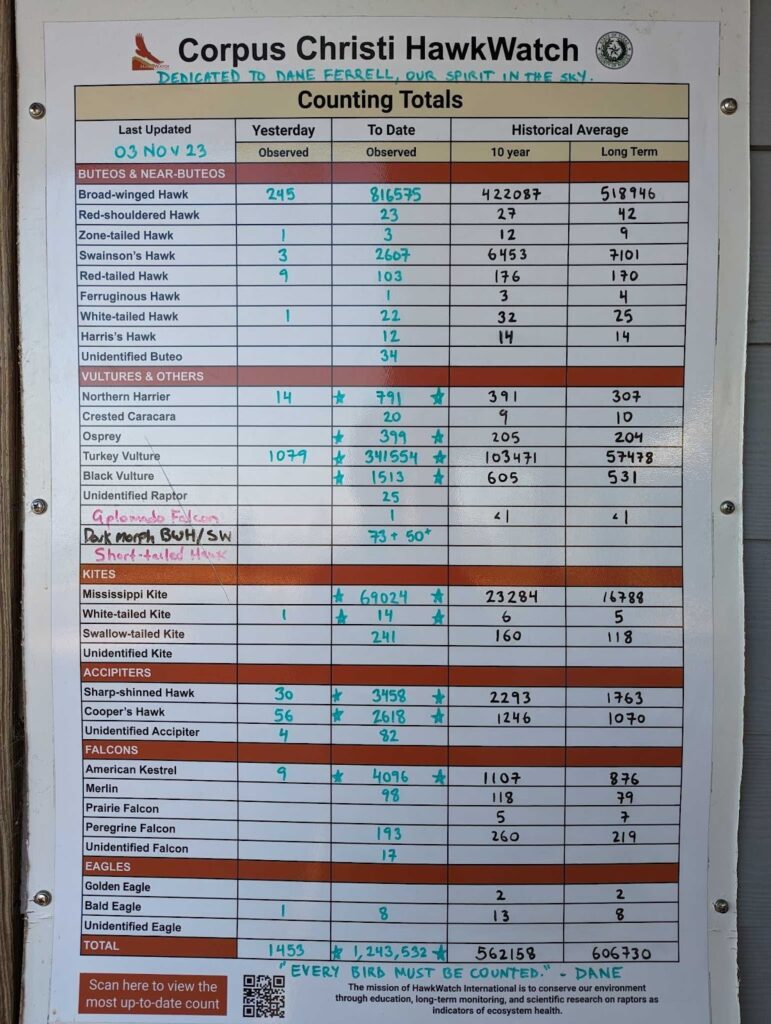
Outbound and inbound migrants tend to broadly retrace their routes, though variation in weather patterns and the prevailing winds can shift where in a flyway migrants tend to concentrate. Relative to fall migrants, spring migrants move across a broader front in a less concentrated manner as they move north. As a result, we see more locations with large concentrations of migrating raptors in the fall, which means fall sites see more hawks, and there are more potential count locations for fall hawkwatchers to count from.
Population and Species Insights
Population trend analyses based on outbound and inbound migration in the same region have shown that fall and spring counts can produce both consistent and inconsistent results. For example, a decline in fall counts and stability in spring counts may tell us a different story than a decline in both fall and spring counts.
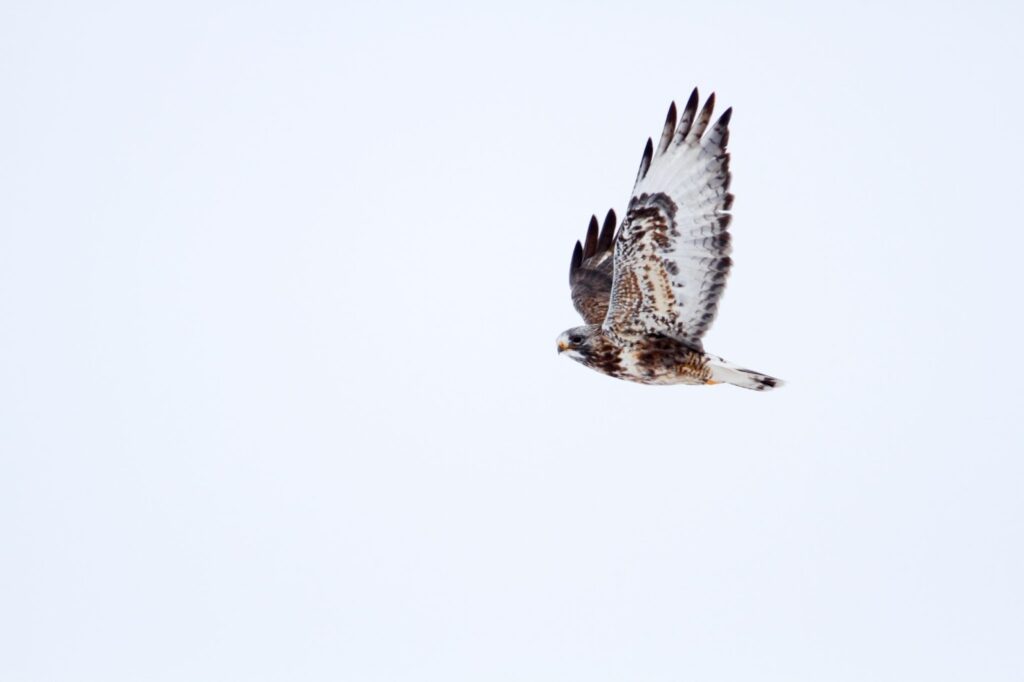
Ultimately, conducting fall and spring migration counts in the same region or from the same hawkwatch enhances our ability to assess the populations that are being monitored because it gives us insight into two significant periods of time within the annual cycle. Additionally, spring counts can enhance our ability to understand trends of species that are counted sporadically during the fall, such as Rough-legged Hawks (Gunsight Mountain HawkWatch), Common Black Hawks (Tubac HawkWatch), and Ferruginous Hawks (Dinosaur Ridge HawkWatch).
Is one season better than the other for counting hawks for science?
It depends
As we choose which sites to operate, we consider the current migration monitoring being done at both the flyway and species levels and ask ourselves whether adding a new fall or spring count will add clarity to our collective understanding of raptor population trends. It’s important to understand whether migration data from a particular area within a flyway is already represented in the RPI for fall, spring, or both seasons.
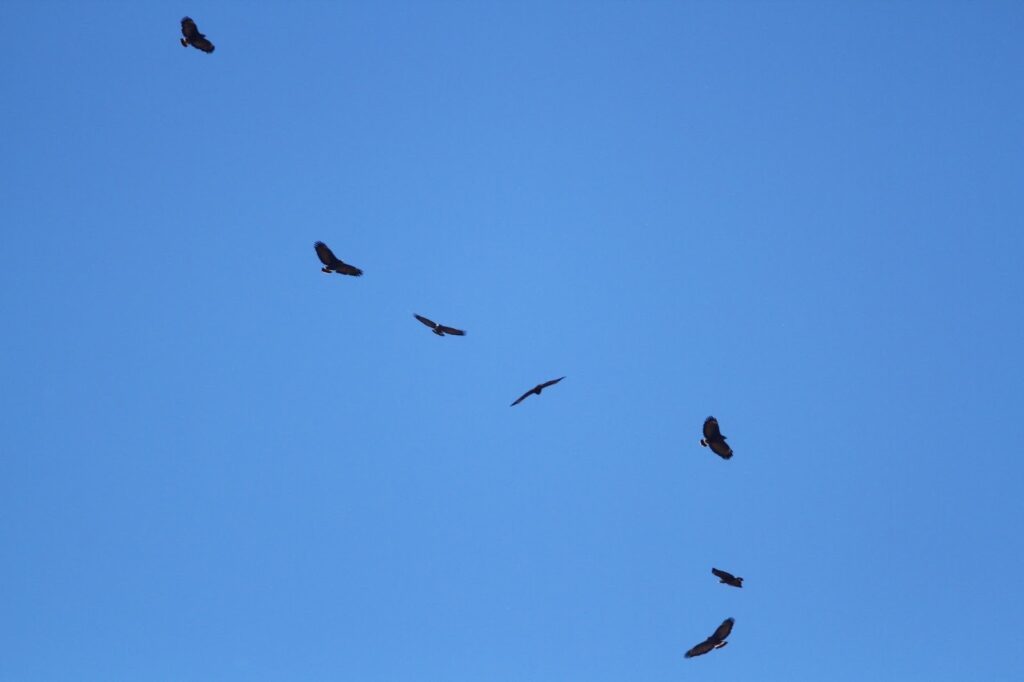
It’s also important to consider individual species and whether we are lacking count data for a specific one during either outbound or inbound migration. We place value on monitoring species/populations that are understudied or are infrequently monitored, such as the Common Black Hawk, Zone-tailed Hawk, and Gray Hawk, which are monitored at the Tubac HawkWatch on their inbound journey.
Logistics and Safety
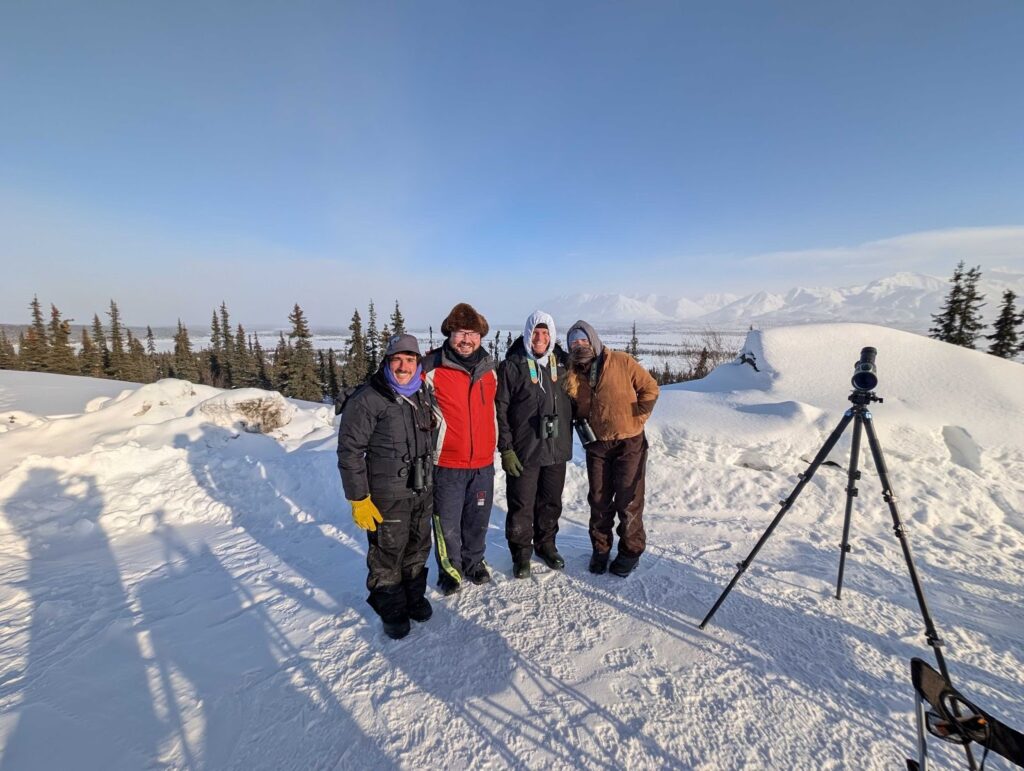
Hawkwatches need to be accessible to hawkwatchers and ideally the public. Many hawkwatches are located near urban centers and are easily accessible, but ridgetop sites, particularly those in western North America, are often located in remote locations, and camping is often the only feasible way to staff the site. During the fall, the snow arrives (ideally) near the tail end of the season, as the hawks finish migrating. During the spring, however, these same peaks are often snow-capped. Even if accessible, conditions present challenges to our crews’ safety and well-being.
Supporting Hawkwatches
While anyone can—and should!—hawkwatch, official, long-term count sites like the ones analyzed by the Raptor Population Index play a vital role in keeping a pulse on the health of raptor populations in North America. Operating sites in this standardized fashion, season after season, is resource-intensive. Each year, HWI crew members count for over 4,000 hours, contributing $550,000 in support in-kind. Even with their contributions as volunteers, HWI invests over $275,000 in monitoring the migration of raptors across our network of six fall and two spring sites. We pursue funding from private foundations and corporations, but because of the nature of this long-term research that changes very little from year to year, there aren’t many funding opportunities available. That’s why we count on support from people like you to keep us counting. Click here to support the migration network.
Although raptor migration monitoring isn’t cheap, it’s still the most cost-effective and logistically feasible means of tracking regional population trends over the long-term. We justify the continued investment of time, effort, and money into decades-long efforts by acknowledging that long-term monitoring requires ongoing effort.
This blog was written by Jesse Watson, our Research Biologist & Banding Coordinator. You can learn more about Jesse here.