I’ve been at HawkWatch International (HWI) for a little more than two decades now, with the majority of that time focused on Golden Eagles. While they’ve undoubtedly become one of my favorite species, I didn’t set out to be a Golden Eagle specialist. This focus evolved quite naturally, as I followed the concerning story the data was revealing. Unfortunately, 2026 proved to be one of the most concerning breeding seasons in a long line of concerning data points. At the risk of giving away the punchline, it’s not all doom and gloom: we are involved in proactive steps that we sincerely hope can slow or even reverse the decline we’ve seen.
One of the first tasks I was assigned when I joined HWI was to summarize 10 years of raptor nesting data (1998-2007) from northwestern Utah. This report revealed that eagle productivity was negatively related to invasive vegetation cover. We hypothesized that the spread of exotic “cheatgrass” in particular was causing increased fires, shrub loss, and a corresponding decline of the eagle’s main prey, jackrabbits, which don’t make burrows and require shrub cover for security. This hypothesis was supported by subsequent work we pursued in an expanded “West Desert” study area with Department of Defense funding and in coordination with many state, federal, and volunteer partners.
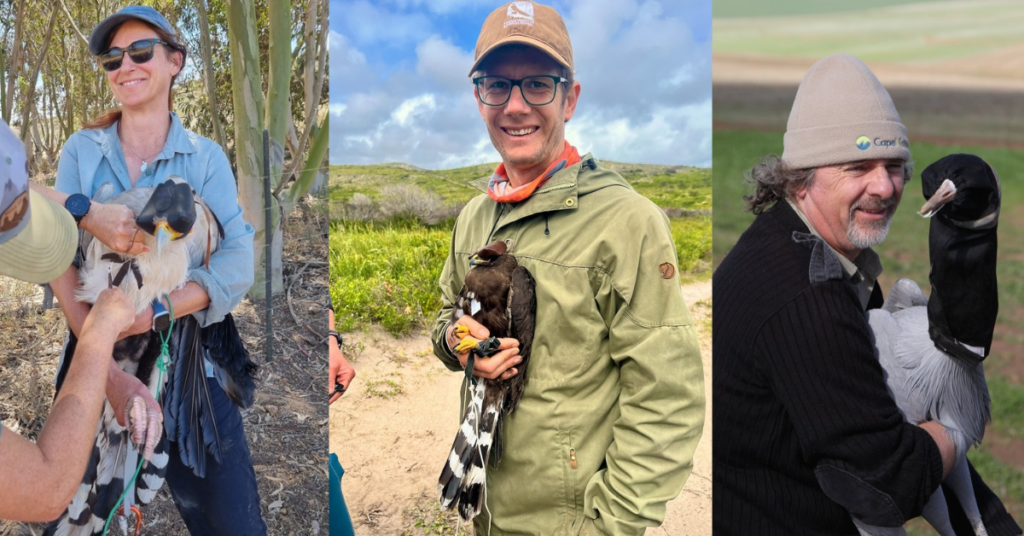
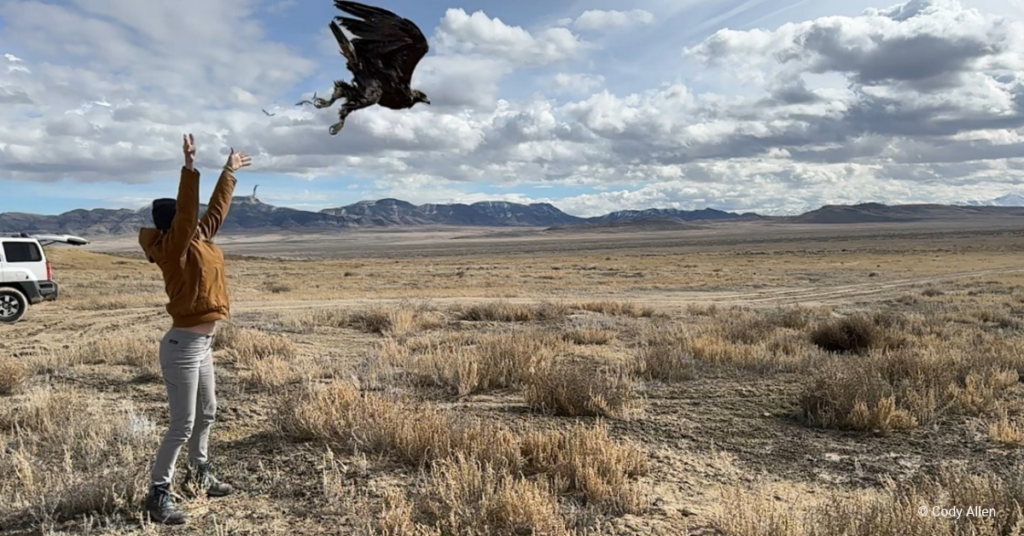
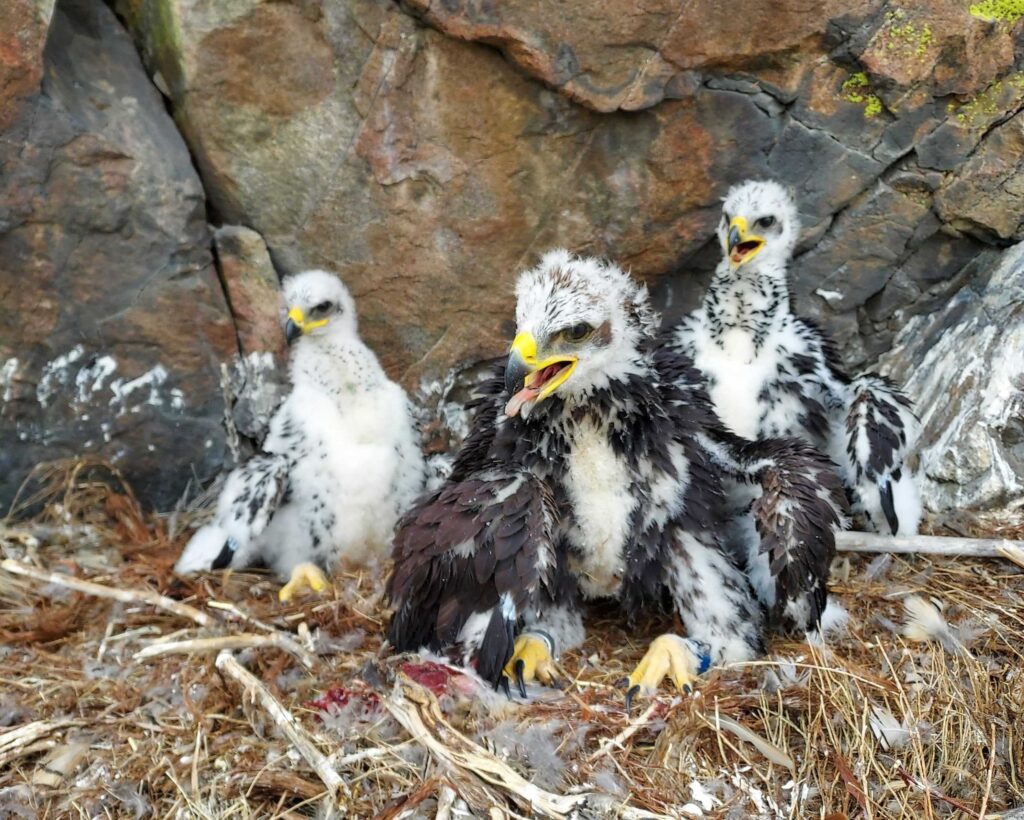
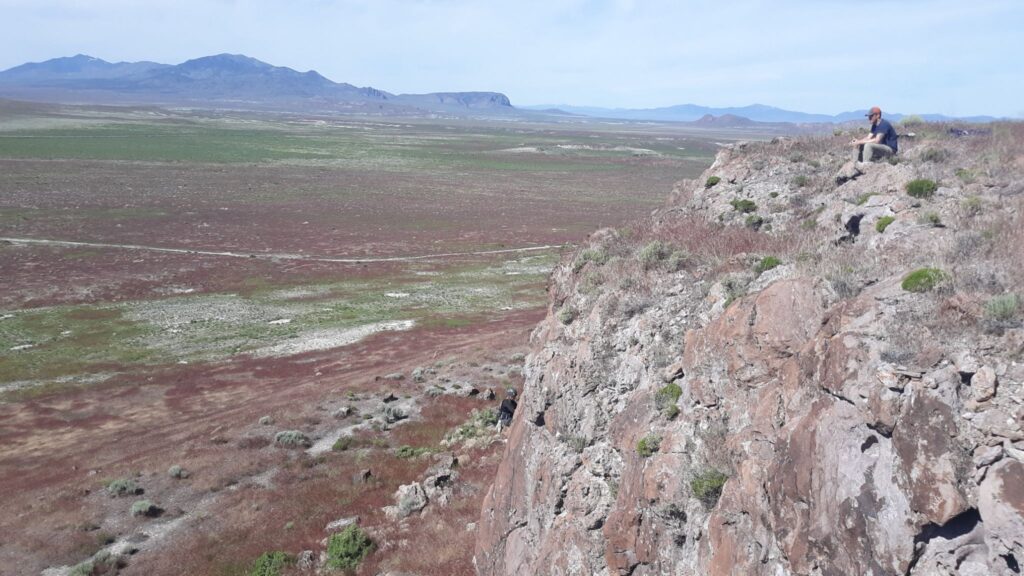
For orientation, the West Desert is essentially the Great Basin portion of the western ⅓ of Utah, where basin and range topography historically provided abundant cliff nesting substrate in close proximity to open desert shrub hunting areas. While it is beyond the scope of this blog to summarize all the work we and partners have pursued in this large geographic area over the decades, suffice it to say that we have intensively monitored many hundreds of territories per year; placed cameras in many dozens of nests; weighed, measured, and placed bands and tracking devices on hundreds of nestlings; taken blood and other health samples, and conducted hundreds of miles of jackrabbit surveys annually. All in all, I can confidently say that the West Desert Golden Eagles are among the longest and best studied eagle populations in the world thanks to these efforts!
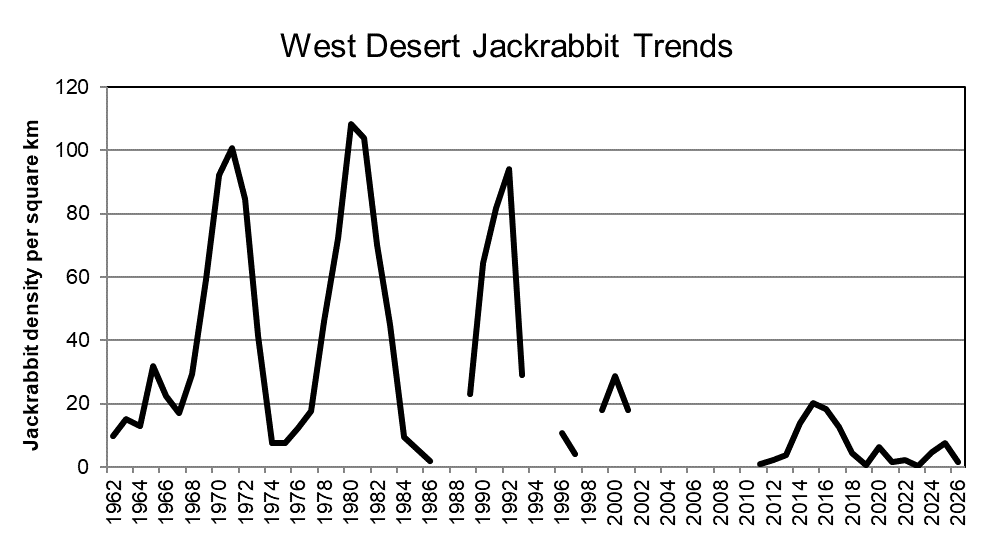
Unfortunately, what the data suggests is fairly dire. In the not-too-distant past (e.g., 1970s, 80s, 90s), jackrabbits went through natural cycles where every 10 years or so they’d spike into highs of ~100 jackrabbits per square kilometer, followed by crashes when their number hovered around lows of 2-10 rabbits per square kilometer for a number of years. Eagle productivity naturally followed these trends. In more recent decades, we appear to have crossed a threshold of fire and shrub loss that has resulted in smaller and fewer rabbit population spikes, and a corresponding decline in eagle breeding. For example, the last real spike of rabbits we saw occurred between 2015-2016, and was only ~⅓ as high as the historic spikes. Additionally, in 2020, we saw the unfortunate introduction of an exotic disease in jackrabbits called Rabbit Hemorrhagic Disease Virus Type 2 (RHDV2 ), which has kept prey numbers low for eagles. Fire-related shrub loss continues into the present, facilitated by warmer winters and drought (i.e., climate change), cheatgrass spread, and increasing human activity (e.g., target shooting, vehicle-sparked fires, etc.).
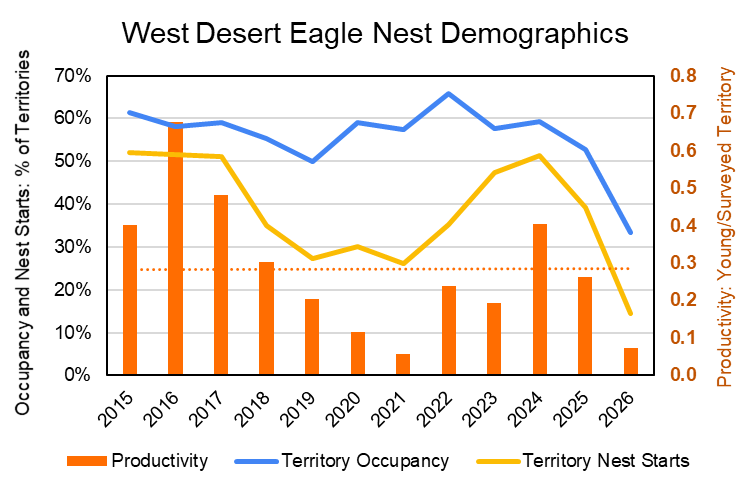
To top it all off, in 2026 we saw the generally poor state of Golden Eagles in the West Desert apparently amplified by a record-setting warm winter. We speculate that the warm winter may have reduced winter food resources even more; for example, through less winter die-off of big game. Eagles are known to be reliant on carrion resources in the winter, when their live prey is less available and when big game populations naturally have higher mortality. Regardless of the exact mechanism, in all the decades I’ve been surveying eagles, I’ve never encountered so many empty territories. Overall, we ended the year with our lowest territory occupancy, lowest nest starts, and only eight total young fledged across 111 surveyed territories! This equates to only 0.07 young/surveyed territory. Eagles are a long-lived species, typically don’t reproduce until five+ years old, and generally only produce one or two young a year. As such, they have what we call a “slow growth” lifestyle. Based on the post-fledge survival data we’ve collected for this population through tracking devices, we estimate that, on average, >0.4 young/year need to be produced to sustain the population. Over the past 17 years, we’ve only met or exceeded this rate in 2015-2017 (corresponding to the last jackrabbit spike) and in 2024 (more on this later). We’ve also increasingly seen sub-adult eagles in territories and even incubating eggs, which additionally suggests that the population is producing too few young to offset mortality at later stages.
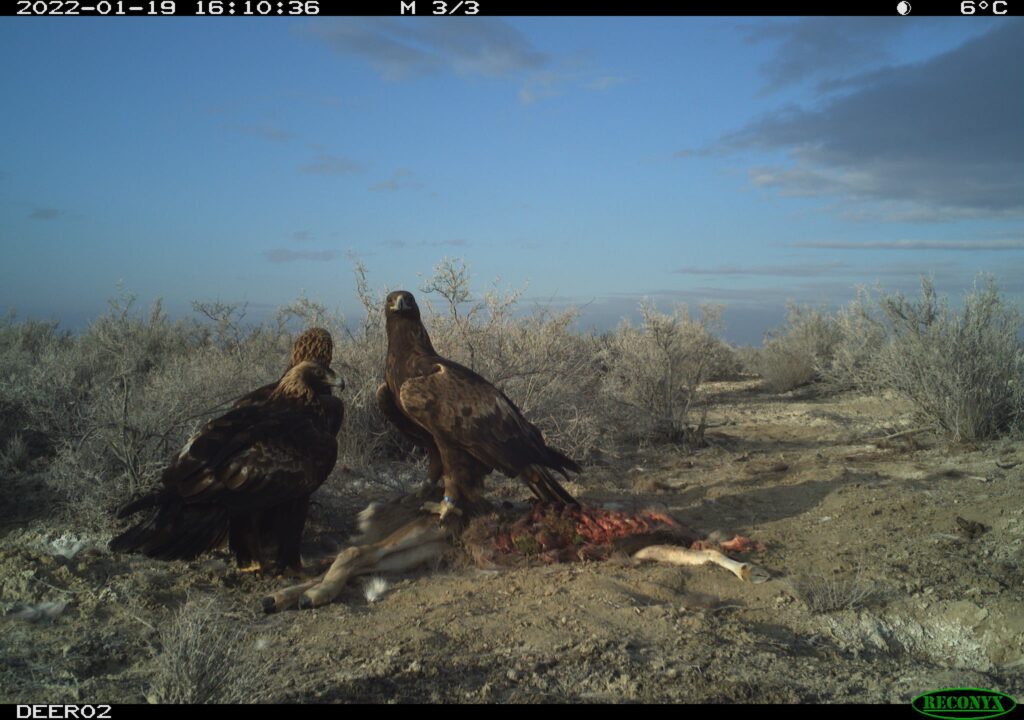
With all this evidence that things aren’t looking good for the Golden Eagles of the West Desert, what exactly can we do about it? Well, hopefully you’ve seen some of our other blogs on this topic, but we’ve been working hard on a “winter feeding” project to increase eagle survival and productivity by providing carrion while food resources are lacking. In fact, we saw an increase in nestling production near our feeding sites, and the 2024 bump in nest productivity previously mentioned was at the end of three years of winter feeding. During this time, we supplied 60 carcasses and over 6,000 pounds at a handful of sites in the West Desert. It was necessary to temporarily stop the winter feeding in 2024 due to concerns about the possible transport of “chronic wasting disease”-infected deer. After a two-year pause, we are looking to begin placing non-deer carcasses (e.g., antelope or domestic calves) again this winter, if all goes according to plan.
Of course, we don’t think “supplemental feeding” to offset the loss of food resources is a viable or desirable permanent solution. We continue to work with partners to promote and help site shrub restoration projects that have the best chance of long-term success near historic eagle territories. We will continue to monitor jackrabbits to determine if/when they show any increase in numbers after RHDV2 hopefully runs its course. We will continue to work with land managers to identify and protect the most productive remaining eagle territories from human disturbance and habitat degradation. And we won’t stop working on other innovative approaches either, like tracking eagle winter weights with “passive perch scales”. Personally, I hope I have at least another good decade in me here at HWI, and my goal is to work relentlessly for this species. Every time I see an eagle in the West Desert, or another empty territory, it gets me thinking about what else we can do. If you also feel moved by the plight of the Golden Eagle in the West Desert, please consider supporting this crucial work: https://hawkwatch.org/saving-eagles/
This blog was written by Dr. Steve Slater, HWI’s Conservation Science Director. You can learn more about Steve here.