While driving in the Monterey Bay area, California biologist Dave Feliz noticed an injured Red-tailed Hawk lying on the ground, and brought it to a rehabilitation center. Sadly, the hawk had been electrocuted, and their injuries were fatal. Dave noticed that the hawk was wearing a USGS band and reported it to the Bird Banding Lab. Unbeknownst to Dave at the time of discovery, this hawk’s story was remarkable.
Dave was admittedly confused after receiving my contact information from the Bird Banding Lab. This Red-tailed Hawk was banded 20 years before its untimely death, and I’m in my 30s. As HWI’s Banding Coordinator, my name is associated with every bird banded by HWI in its nearly 40-year history, but in this case, I was actually present the day this bird was banded. You could say that both 14-year-old me and this hawk were juveniles on that late August day in 2002.
Fall migration and raptor conservation have been a big part of my life; you could even say it is in my blood. My dad is the state raptor biologist in Washington, and I often tagged along to his “office” growing up. In the fall of 2002, I spent many days at the Chelan Ridge HawkWatch with my dad, who was collaborating with HWI to get the site’s banding program off the ground. What are the odds that this recovered Red-tailed Hawk was banded the very season I spent at Chelan Ridge?
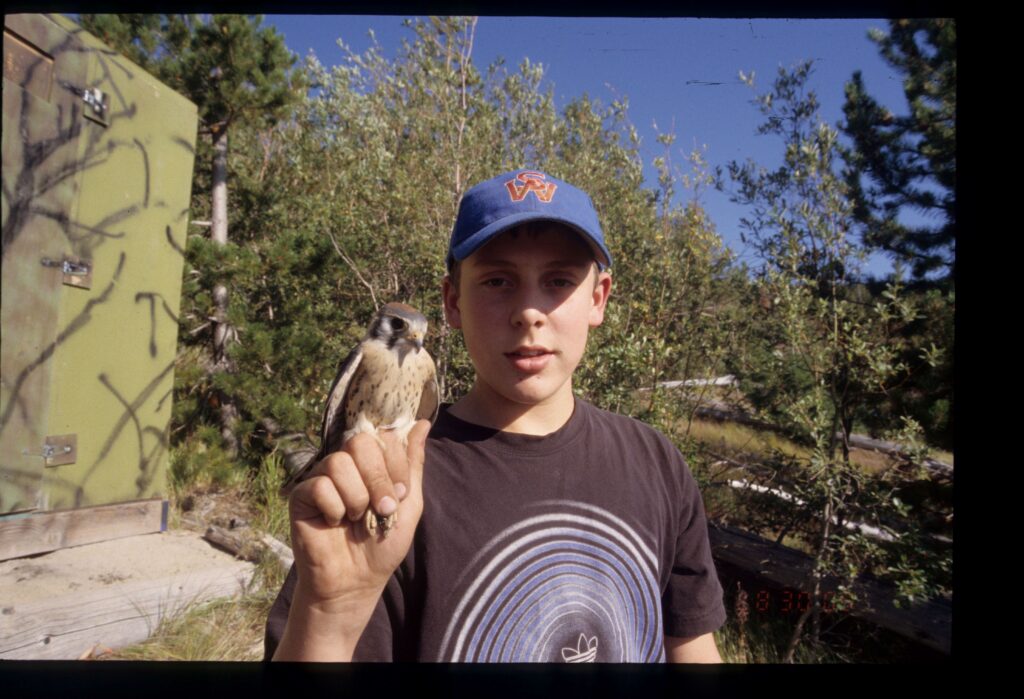
Thanks to the efforts of the 2002 migration crew, and Dave Feliz reporting this band, we gained critical insight into Red-tailed Hawk movement (Washington to California), longevity (21 years), and mortality (electrocution). While rare, these recoveries accumulate over time and add important insights into the lives of the raptors we work to conserve.
Although this story is very personal to me, it is an example of the power of HWI’s migration network and the impact today’s crews can have on raptor research and conservation. Migration monitoring is much larger than banding, though. Long-term migration counts are the cornerstone of raptor conservation. Counting raptors every year for decades is not flashy research, but it is the basis for a large proportion of current raptor research and conservation efforts.
Without migration monitoring, we would not know that nearly half of the 74 North American migration sites saw declining counts of Red-tailed Hawks between 2009 and 2019. This data doesn’t just come from biologists like me. Contributions from volunteers and regular visitors make a difference too. We invite you to be a part of this important work.
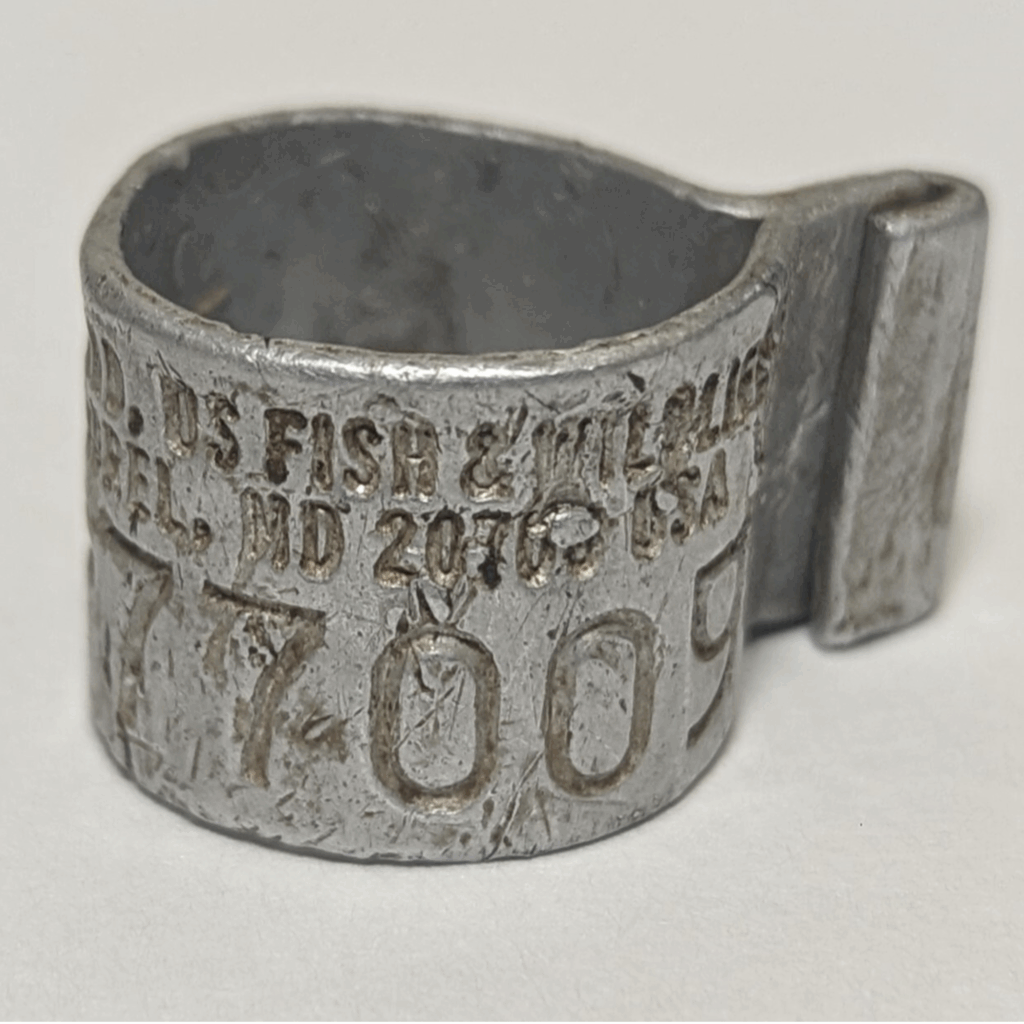
This is the USGS band from the recovered Red-tailed Hawk. Dave was kind enough to send me back this 20-year-old band.
My time at the now-retired Chelan Ridge HawkWatch left a huge mark on my life, both personally and professionally, and led me to my role at HawkWatch International today. All these years later, I’m now a leader of our migration network and can see the impact my dad and I made alongside HWI two decades ago. Talk about a full-circle moment!
It is easy to take this foundational work for granted, but it comes at an immense cost. Despite the in-kind contributions from our 30+ crew members and partners, operating HWI’s network of eight sites costs over $270,000 each year. Thanks to private funders and a generous donor covering our migration crew’s stipends, we have just $70,000 left in costs to cover. Will you help us close the gap?
As a scientist, asking for donations is a bit outside of my comfort zone, but I know the power your contribution has to protect the raptors you and I love. Click here to give: https://hawkwatch.org/supportmigration/
I still keep up with some of the 2002 migration crew at Chelan Ridge HawkWatch who helped me discover my passion for raptors, along with many of the crew whom I have had the pleasure of hiring and mentoring since joining the HWI staff. I hope you visit your local hawkwatch this fall to experience the magic of migration, the impact of this research, and find community in conservation.
P.S. Committing to an annual gift each fall will provide us with reliable funding to ensure the network continues to collect essential data and educate thousands of visitors each year. If you sign up for an annual donation of $150 or more, we will send you a free HWI luggage tag featuring one of my photos and provide you with early access to our migration report each year!
This blog was written by Jesse Watson, HWI’s Research Biologist & Banding Coordinator. Click here to learn more about Jesse.