When I first moved to Utah to work for HawkWatch International (HWI) in 2006, I heard whispers of this guy who had been climbing into nests and banding Golden Eagles in Utah since the 1970s. He was apparently also responsible for finding over a thousand eagle nests over the decades, including most of the nests and territories I surveyed during my first field outings for HWI. In our raptor nest database, his legacy was readily apparent in the names we gave those territories (e.g., “Keller Grassy Mtns SE”). And while we had some of his hand-typed annual reports in our office, I didn’t know much else about him.
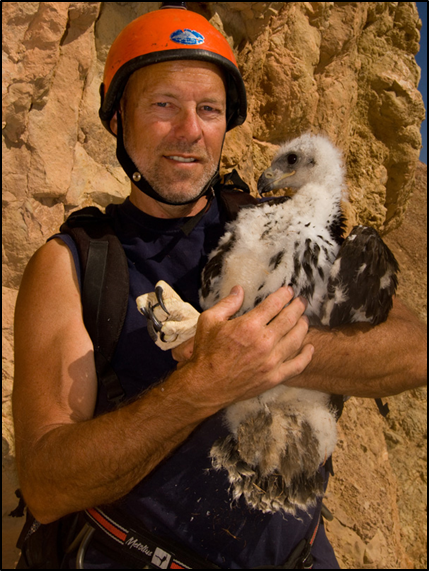
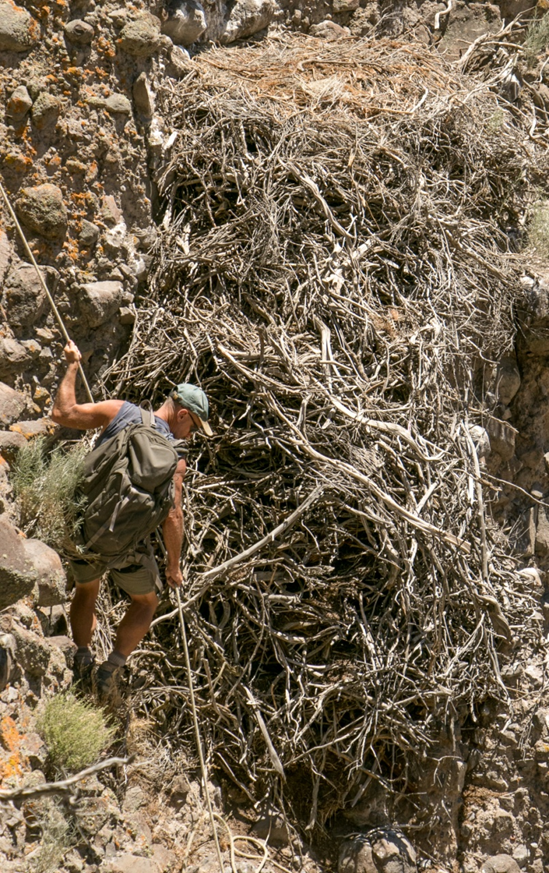
Over the next few years, Kent gained an almost mythical quality in my mind. Who was this guy that was climbing into so many eagle nests? I heard he was largely self-taught and sometimes free-climbed into nests. I heard he was most often a one-man show, with no field support or safety crew. I heard he had banded more Golden Eagles than any other human on the planet. But yet, I never ran into him at any wildlife or raptor meetings, and only a handful of people in those circles even knew his name.
Fast forward to 2010, when HWI was tasked with compiling all historic raptor nest records available in the West Desert to assess population trends in relation to habitat change. It was obvious that Kent had the longest-running and best data for eagles, but I still had no idea how to reach Kent or if he’d be interested in participating. To make a long story short, we were eventually able to connect with Kent, and he had data in spades: literally a basement full of binders with typed and handwritten field notes. Kent wasn’t really interested in participating in our many “Eagle Working Group” partner meetings or promoting his own work. But he graciously allowed us to borrow his priceless binders and scan them one at a time to create digital records of his data. That data, combined with our own and other partners’ data, showed a concerning decline in breeding productivity, which was instrumental in getting the Golden Eagle added to the Utah sensitive species list.
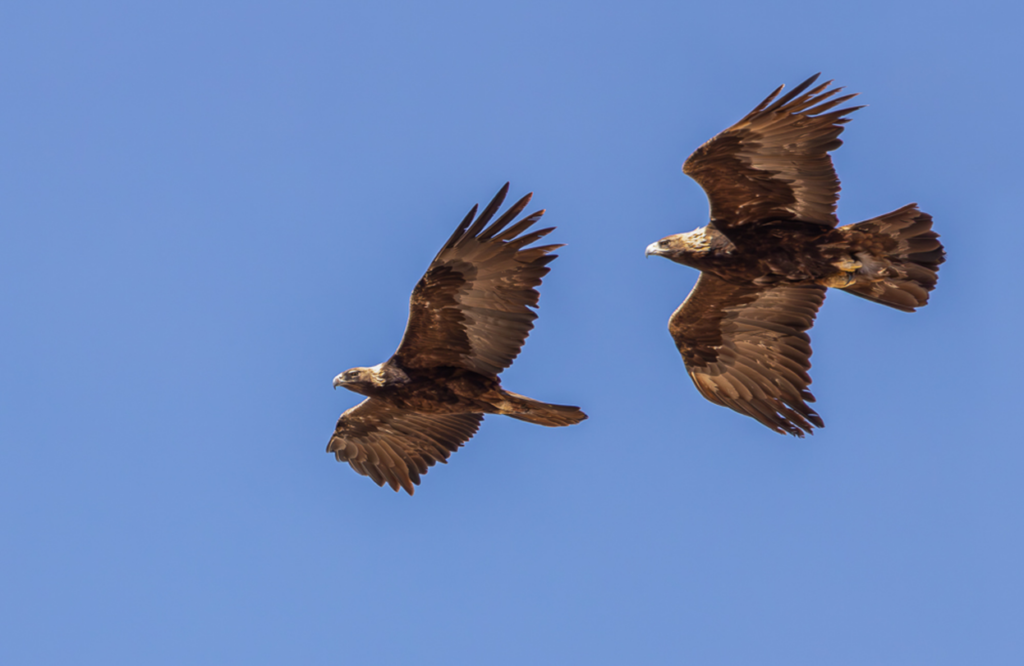
Over the following decades, I started to see a pattern with Kent. He absolutely avoided the spotlight, preferring to quietly keep banding eagles, collecting data, and writing his annual reports. You wouldn’t find him at a professional meeting of “eagle experts”, even though he’s arguably the world’s foremost expert on the species. He wasn’t being followed around by media crews, even though what he was doing was absolutely newsworthy. Instead, he was happy to let others use his data to highlight concerns or pursue publications, if that’s what was needed. For example, his data has featured heavily in multiple publications, including assessments of Golden Eagle population trends, natal dispersal distances, nesting diet patterns, and recommendations for nest protections.
Kent has also been a wonderful partner and supporter of HWI’s work. I already mentioned that many of the nests we still monitor to assess annual trends (see recent declines) were first found by Kent during his early decades of scouring the landscape for any and all nests. When HWI started putting transmitters on nestlings in 2013 to investigate post-fledge movements and survival, Kent was instrumental. He gave us near real-time data on the nests he was tracking, the age of the young, and details on nest access. When HWI started putting out color bands in 2017 to increase re-sighting of individuals, again, Kent was on board to help (he’s put out >50% of the 434 color bands we have collectively deployed so far). Later, when HWI began investigating nestling health with cameras, blood draws, and other sampling at nests, Kent shared access to the nests he was monitoring to aid our efforts. Beyond that, Kent has been an invaluable source of information for me personally. Kent is always open to questions about eagle behavior. In fact, I’ve found that many of my questions find their way into his next annual report as a new table or paragraph for future reference! Thanks to him, we now have answers to burning questions like: how often have you had “encounters” with adults during your thousands of nest entries? Fortunately, it’s relatively rare!
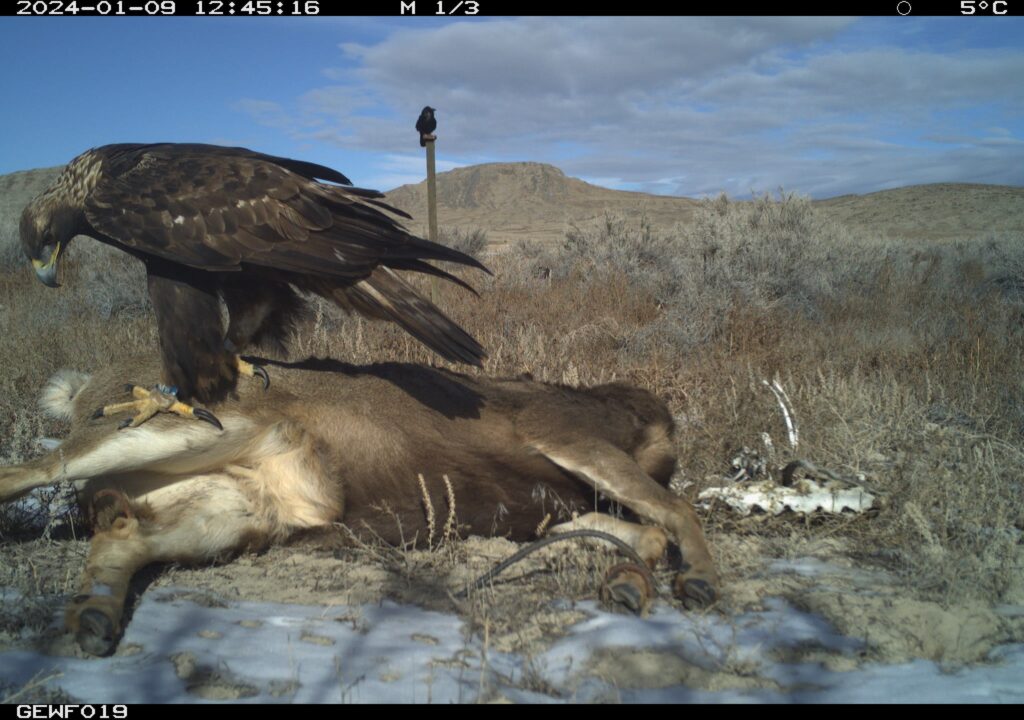
Kent banded “MW” as a nestling on May 22, 2020, about 80 miles from where this photo was captured 3 ½ years later as part of HWI’s Golden Eagle Winter Ecology project.
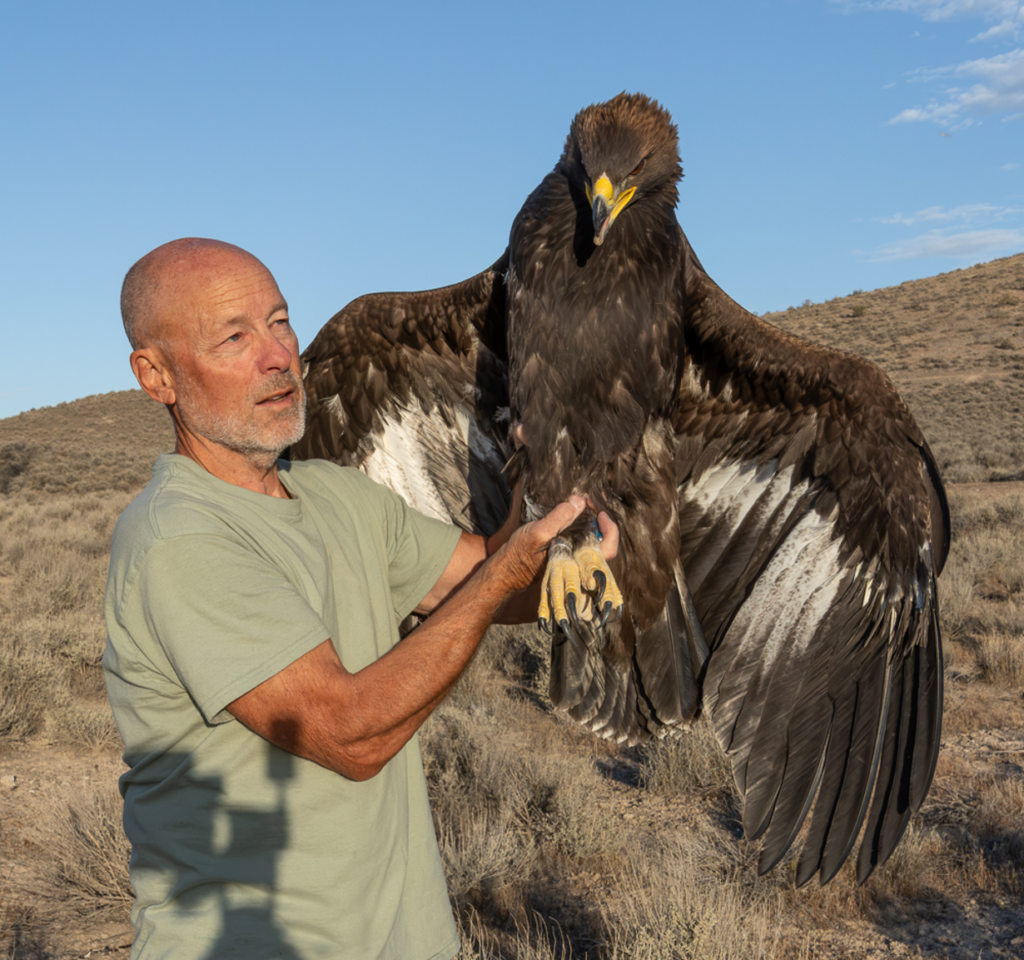
Suffice it to say, I’ve come to really lean on Kent’s data and expertise. So, when he stopped by HWI’s office this June and announced nonchalantly that he was “retiring” from his eagle work after 50 years, I was a bit floored. I mean, this is where I just have to drop some of his amazing accomplishments so you can grasp what was going through my mind. Kent has banded a total of 2,416 Golden Eagle nestlings! Banding a single eaglet is no easy task. That is the whole point of nesting on rugged cliffs in remote landscapes: to avoid predators (and people) reaching your eggs and young. Kent logged hundreds of hours and thousands of miles each year to rappel and climb into these nests. To put things in perspective, Kent has single-handedly accounted for 16% of all Golden Eagles banded in the United States! This includes all the bands put out by countless other individuals at numerous hawkwatches like our own. A total of 216 of his birds have been re-sighted over the years, including an unfortunate 50 vehicle strikes, 47 electrocutions, and 16 shootings. Kent also had the foresight to count prey items in the nest each time he visited. He tallied a whopping 33,767 food items at nests, representing 165 species! If you live in the Golden Eagle’s range, you’re probably on the menu. His data has also really helped us put the recent declines of the jackrabbit, their preferred prey item, in perspective.
All in all, it’s hard to fathom the full scope and impact of Kent’s unparalleled eagle work or the influence he’s had on raptor researchers like myself. And his trove of data will continue to be utilized for decades to come. Beyond eagles, Kent is also an amazing naturalist and photographer. His reports are filled with incredible images of adult and nestling eagles. His photos have been featured in our HWI calendars over the years. Recently, he’s taken an interest in macro photography, and his compositions are downright surreal. Check out some of his work here, if you’re interested: https://kent-keller.pixels.com/.
Shortly after Kent announced his retirement, we had lunch together to talk about all things eagles. He shared some interesting stories, that’s for sure! As you can imagine, Kent has faced everything from dehydration to head wounds, from nest bugs that hitched a ride home with him, to questionable characters in the desert. After chatting for a while, I asked Kent if we could honor him in some way at a wildlife meeting or raptor conference. In typical fashion, he declined. He did say I could write a blog, though, which I was extremely honored to do. Of course, I can’t capture everything about Kent in a short blog, and this is just the perspective I have from our interactions. Words alone feel vastly inadequate, but I’ll do my best: a huge heartfelt thank you for all you have done, Kent! Like the Golden Eagle you’ve studied for so long, you are truly a giant in the raptor world. Your efforts and data will surely benefit the species for decades to come!
This blog was written by Dr. Steve Slater, HWI’s Conservation Science Director. You can learn more about Steve here.