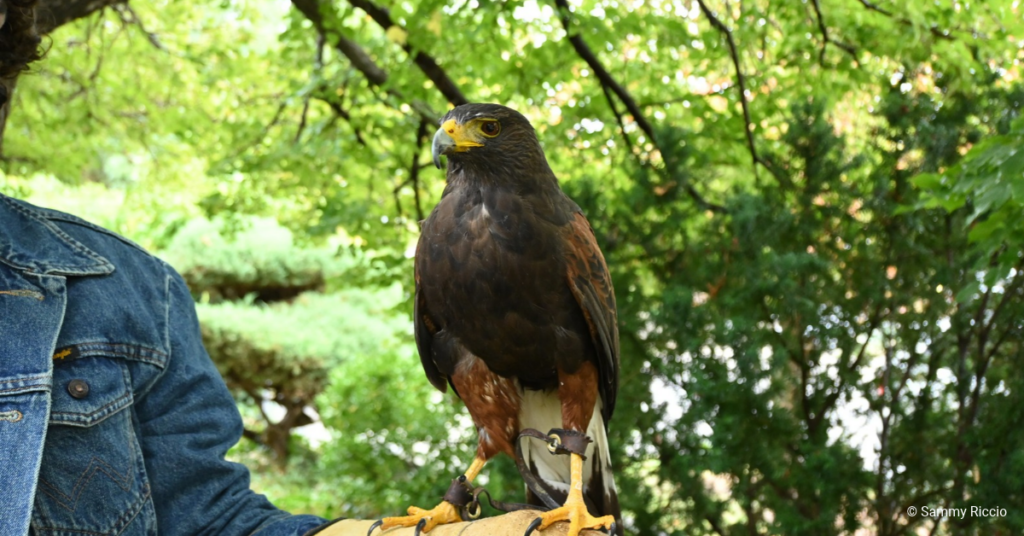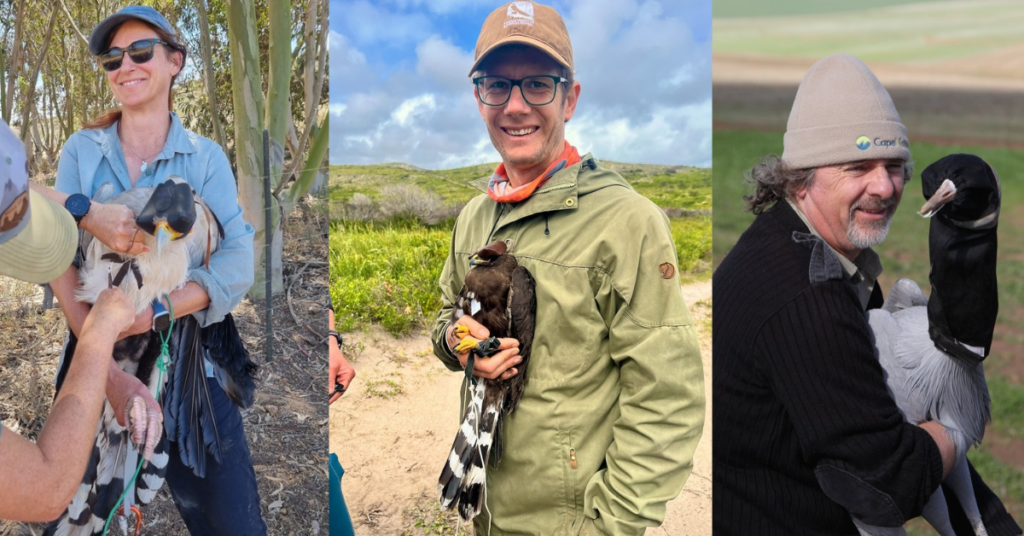
Spring is in the air, and like their wild cousins, our Raptor Ambassadors are thinking about nesting. Many people are surprised to learn that our birds often lay eggs around this time of year. Interestingly, this is a behavior we have only seen in our Raptor Ambassadors that are human imprints. While our wild-reared birds have the physical capacity to lay eggs, they typically don’t. We aren’t sure why this is the case, but it’s certainly possible that human imprints are more likely to experience the hormonal cues triggered by a nearby potential mate when associating with their human caretakers than wild-reared birds. This is yet more evidence that human imprints lack the proper instincts to thrive in the wild. While it can be flattering when Kotori the Great Horned Owl flirts with me, it’s also a little sad as I can never lay him an egg.
One of my favorite fun facts to share with adult learners is that several of our Raptor Ambassadors are on birth control. We utilize birth control under the advice of our veterinarian, Dr. Nicolle Lofgren, to help keep our birds healthy. While egg-laying is a normal part of bird life, it can also cause significant stress on their bodies. What’s more, raptors don’t go through menopause like humans do. That means that even a very old bird may continue producing eggs long beyond her peak reproductive years.
Many raptor species can live for over a decade longer than is typical for wild members of the same species. Thanks to medical care, regular diets, and less exposure to predators and disease, these birds enjoy long, comfortable lives, but those golden senior years can also come with complications we simply don’t see in wild populations because they just don’t live long enough to develop them. One of these issues is an aging reproductive system that struggles to produce healthy eggs.
One case in point is our Peregrine Falcon, Goose. She joined HawkWatch International as a Raptor Ambassador in 2015. At that time, we estimated she was two to three years old, but there was no way to know for sure. Peregrines get their adult plumage around two years old, and since Goose had adult coloration, we knew she was at least that old. Since then, Goose has spent more than a decade inspiring learners of all ages to conserve raptors. During that time, Goose has laid over a dozen eggs, turning into a fiercely protective momma in their presence. Initially, our policy was to allow Goose to keep the eggs for approximately four weeks, which is the normal incubation period for the species. After that, she seemed to understand that they wouldn’t hatch, and we could safely remove them and allow her hormones to return to normal. We didn’t take the eggs sooner because it might have triggered her body to continue producing them. A normal clutch for a Peregrine is 2-5 eggs, and this seemed to be about what Goose laid each spring.
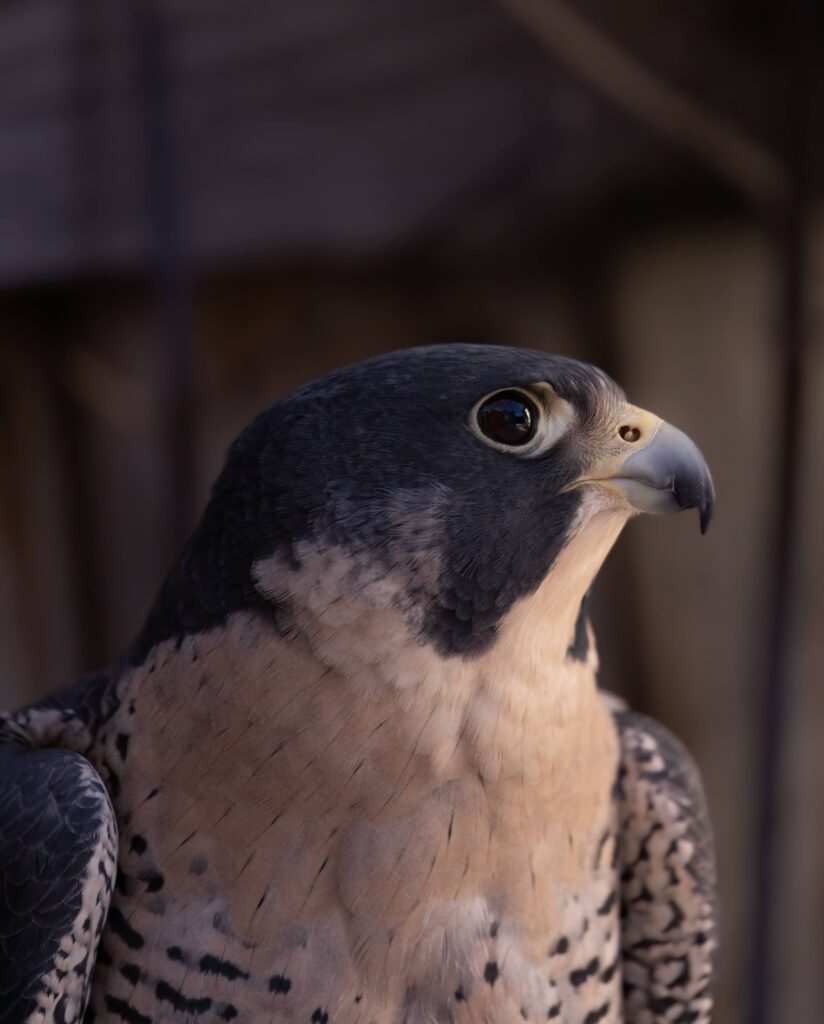
However, a few years ago, we noticed that Goose’s egg laying seemed delayed. Her behavior also started to change. She was eating less and acting subdued in a way that just didn’t feel right. We consulted with our veterinarian, who encouraged us to bring her in for an X-ray. Thanks to Dr. Lofgren’s intervention, we learned that Goose had become egg-bound. Egg binding happens when a bird isn’t able to form a normal, hard-shelled egg. The soft or misshapen egg gets stuck in the bird’s reproductive tract and can lead to a life-threatening infection. Thanks to calcium injections and antibiotics, Goose fully recovered from the experience. It was at this point that we learned it was possible to put Goose and our other egg-laying birds on birth control as a way of preventing future complications.
To help explain raptor egg production and the science behind bird birth control, we asked our vet, Dr. Lofgren of Mountain West Veterinary Specialists Exotics, a few questions.
Why do raptors lay unfertilized eggs?
Producing an unfertilized egg is normal in all species, including humans! Unfertilized eggs are laid in response to hormonal stimulus, which is typically induced by light exposure or proximity to a mate. In birds, longer periods of light indicate spring, and therefore, warmer weather is coming. Warmer weather means it’s safe to raise chicks, and more plentiful food is coming, so longer periods of light trigger the hormones that cause egg production!
Why do you prescribe birth control for ambassador birds?
Birth control for birds is something I consider in birds with a history of difficulty with egg laying, hormones, or reproductive cancers. Difficulty with egg laying often occurs due to nutritional depletion from making the egg. Each time an egg is made, further nutritional depletion occurs. Shutting down egg production is a way to give the body a break, allow the bird to recoup nutrients, and prevent soft-shell eggs or other issues that can cause egg binding (aka when an egg gets stuck inside).
Hormonal stress is common in captive birds because of excess light exposure, which can not only lead to excessive egg laying and nutritional depletion, but can also cause immune suppression—this can even affect males! Birth control can reduce hormonal stress even if the symptoms are not egg-related.
How does this birth control work?
We use a type of medication called a GnRH agonist—a drug which causes the body to think it is over-producing GnRH (gonadotropin releasing hormone, aka a hormone which signals the body to produce hormones). Because GnRH works by a negative feedback loop, causing a surge of GnRH actually tells the body to produce less hormones, as it tricks the body into thinking it’s already producing too much.
Goose has continued to struggle with reproductive issues. Her egg issues, combined with some other signs, suggest she may be older than we initially thought. Raptors are excellent at hiding injuries or illness. In the wild, displaying weakness is dangerous. Other predators may see it as an opening to attack or take over a territory. This means we have to be closely attuned to our birds’ behaviors to know when it’s time to intervene. We weigh our birds every day and monitor their food intake. We also spend at least two hours each day cleaning, preparing diets, and providing enrichment for the birds. This gives us the chance to observe them and note anything unusual in their behavior or appearance. It’s thanks to protocols like these that we have always managed to notice Goose’s issues in time to safely treat them.
We’re very grateful for the support and expertise of Dr. Lofgren. Her advice and expertise have improved the health and well-being of all our birds, especially those who produce eggs. It’s certainly possible that Goose wouldn’t be with us today without Dr. Lofgren’s intervention. We also want to thank all the members of our docent bird care team. Their dedication and attention to the birds have helped us act quickly on behalf of our Ambassadors on numerous occasions. The bird care teams’ keen eyes and loving hands provide the best of care for the birds in our charge.
This blog was written by Melissa Halvorsen, HWI’s Education & Outreach Director, and Dr. Nicolle Lofgren. You can learn more about Melissa here.