When you start working with raptors, you soon find out that there is a whole new language that comes along with it. We’re here to help you decode it! Below is not an exhaustive list of terms; rather, these are just the terms we find are commonly used and that we regularly use ourselves when working with our Raptor Ambassadors. Every group that works with raptors, including falconers, rehabbers, zoos, or other educational institutions, has specific terminology that does not necessarily apply to all other groups.
General
Raptor Ambassadors: a permanently non-releasable bird of prey housed at a wildlife center or zoo with education permits
Imprint: when an animal misses the critical period of time early in their life when it forms attachments and develops a concept of its own identity, gaining a sense of species identification. Typically occurs when a wild animal is brought into captivity or rehab at an early age and is not released back into the wild within this window.
Non-releasable: animals with injuries, impairments, or imprinting deemed unable to survive in the wild
Bird Behavior
Bate: the action of the bird attempting to fly from a perch or the glove while attached by a leash
Feak: the action of a raptor wiping the beak against a surface (a perch, branch, or even the glove) after feeding. Can be a sign of a content bird.
Footing: when a bird uses its feet and talons to defend itself
Gaping: when a bird holds its mouth open, often when they are hot or stressed
Gular Flutter: when an owl pants and their throat “flutters” as they breathe in and out. Often when they are hot or stressed. Note that all raptors pant, but do not gular flutter.
Mantling: a defensive posture where raptors spread their wings and hunch over, creating a large appearance or shield to protect their food or young
Molt: the annual shed of old feathers that are replaced by new ones
Mute: the act of defecating or the excrement of a raptor, containing both fecal matter and urate
Preen: a maintenance behavior of birds that involves the use of the beak to position feathers, interlock feather barbules that have become separated, clean plumage, and remove parasites that live on their feathers
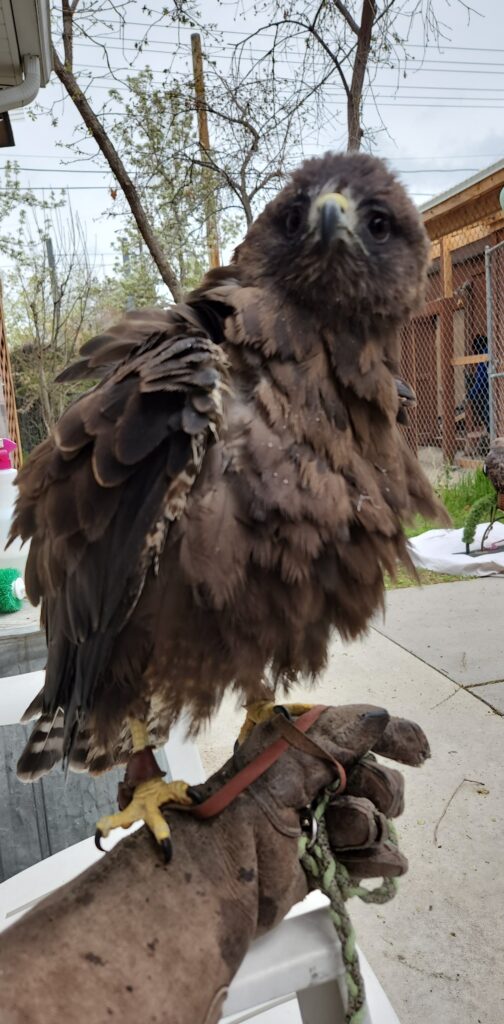
Rouse: raising feathers away from the body, shaking them out, and rearranging them. Often, this behavior occurs during grooming, after a bath, or simply when the bird feels content and relaxed. Rousing clears the plumage of any debris or excess water
Bird Care
Blood Feathers: feathers that are still growing and have blood supplied through the shaft. Damaged blood feathers require immediate attention to prevent rapid blood loss.
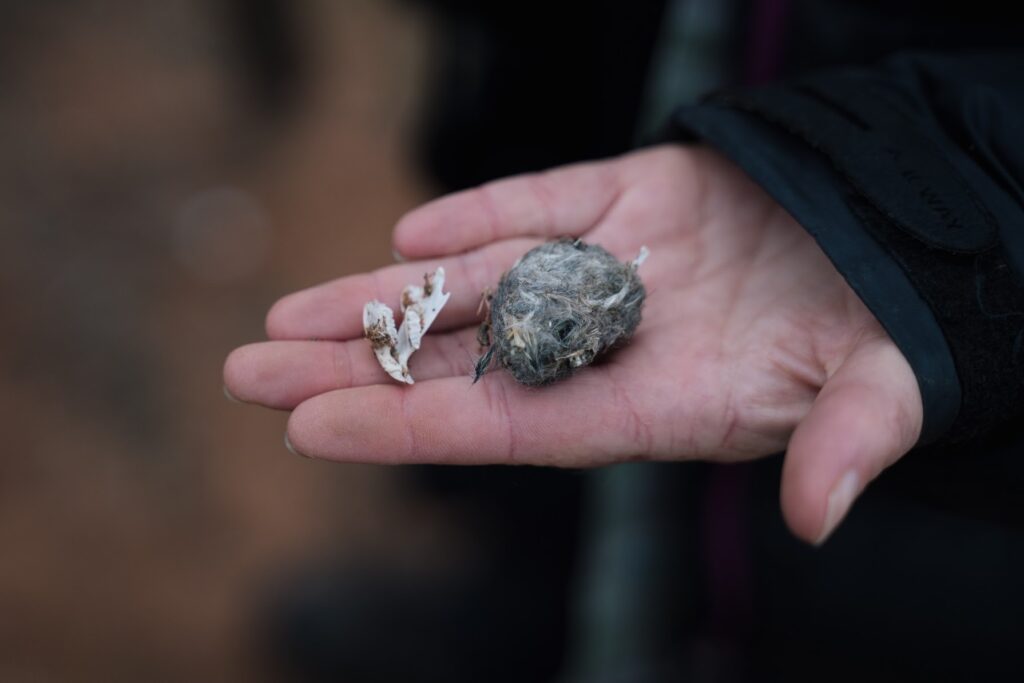
Casting: the regurgitated matter (indigestible parts of food such as feathers, fur, bone) regurgitated by raptors. Also known as a pellet.
Coping: to clip the beak or talons of a bird
Enrichment: activities and opportunities that encourage natural behaviors that prevent boredom in captive animals
Urate: the liquidy white part of a mute
Weathering: tethering a bird to an outdoor perch for stimulus, to sunbathe, and to preen safely
Gear
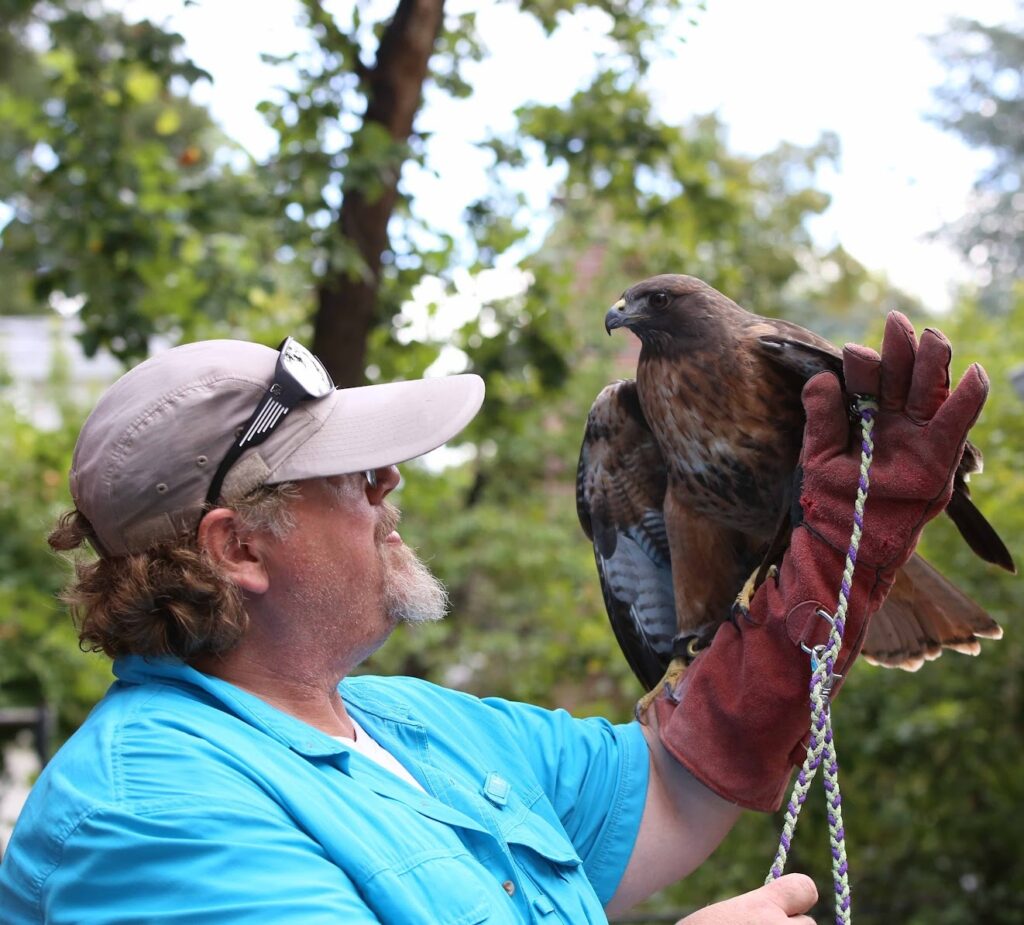
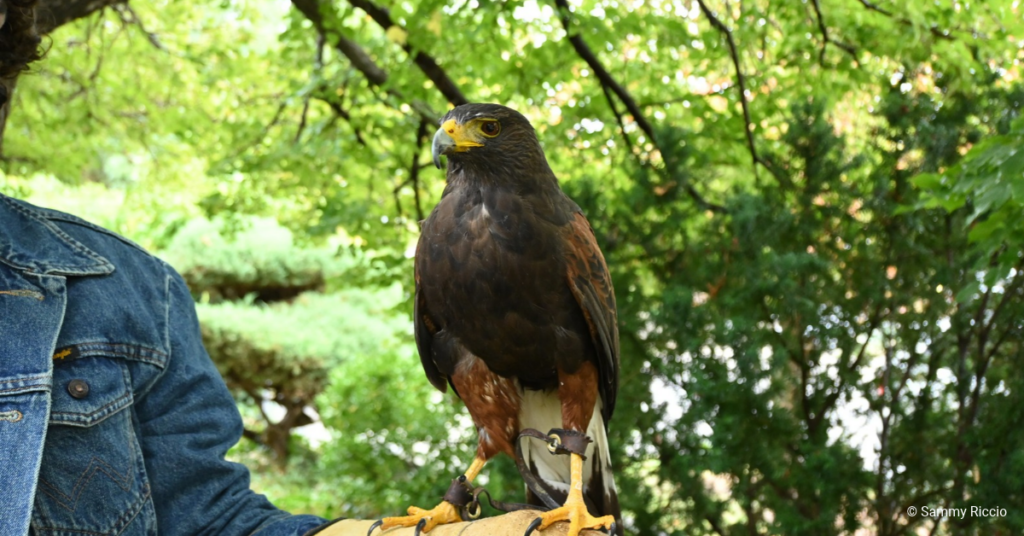
Anklet: leather placed around the “ankles” of a captive bird that jesses will attach to
Glove/Gauntlet: a glove worn by a falconer, traditionally on the left hand, offering protection to you and support to the bird.
Hood: leather head covering that prevents raptors from seeing and keeps them calm
Jess: a thin strap, traditionally made from leather, used to tether a raptor. Jesses allow control of a raptor while it is on the glove or in training, and allow a bird to be secured on a perch outside.
Leash: a cord used to tether a bird to the glove or perch
Swivel: a twisting mechanism which prevents the leash attachment from twisting or tangling about itself or the bird
Perching and Enclosures
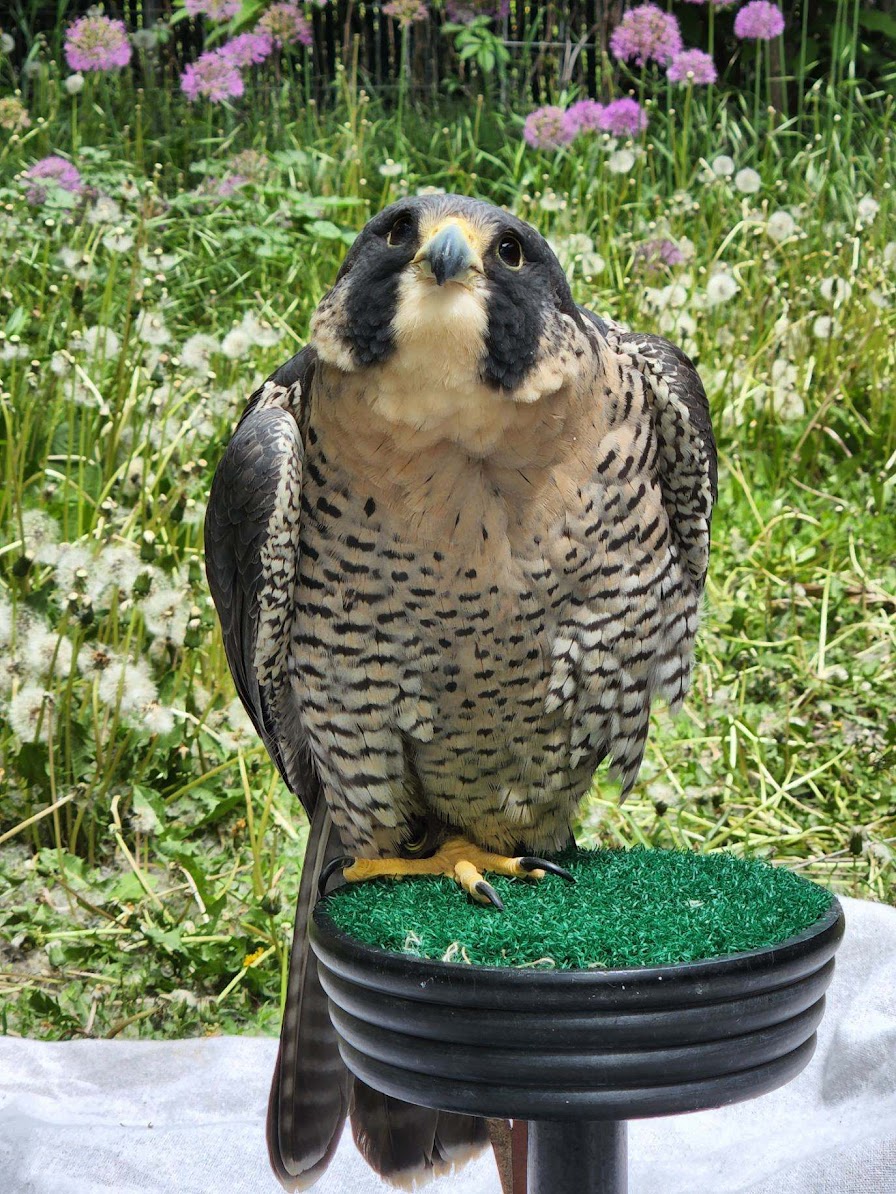
Block perch: a cylindrical pedestal traditionally used for perching falcons
Bow Perch: rounded perches where the bird sits with a hefty rectangular base. Between the two is a bar with a metal ring where the leash attaches.
Free loft: a bird of prey kept in an enclosure untethered, with the ability to fly and move around freely
Mew: an enclosure, or provided “living space” for captive raptors
Tethered: to be fastened to a perch or glove by a leash
This blog is part of our Raptor Vocab 101 series where we walk you through raptor vocabulary so you can better describe and understand what you are looking at when identifying or working with raptors. Others in the series include raptor types, anatomy, plumage, and aging.
This blog was written by Sammy Riccio, HWI’s Communications Manager. You can learn more about Sammy here.