Alarming Cat Statistics
As a bird-lover, you’ve likely seen some talking head videos bemoaning the impact of domestic cats on wild bird populations. The most commonly cited study is “The impact of free-ranging domestic cats on wildlife of the United States,” published in the journal Nature Communications in 2013. Researchers Scott Loss, Tom Will, and Peter Marra conducted an analysis of existing studies on wildlife predation by free-ranging cats in the United States, Europe, and other temperate regions, mostly in Australia and New Zealand, with support from the Smithsonian Institution and the US Fish and Wildlife Service. The authors proposed a wide-ranging estimate of cat-caused bird mortality that got a lot of media attention. The claim is that domestic cats kill 1.3 to 4 billion birds annually in the US alone (Loss, 2013). If the studies these authors used to make their assessment are correct, that makes domestic cats the most significant form of human-caused bird deaths by far. In fact, even at the low end of the range, cats are deadlier to birds than window collisions, cars, wind turbines, electrocution, and poisoning combined (USFWS: Threats to Birds).
The Pushback
Not surprisingly, there was a lot of pushback on the 1.3-4 billion figure from the Nature Communications article. Some argued that the analysis was too dependent on small-scale studies that made the extrapolated data unreliable. Additionally, there is an argument that the number of cats in the United States is unknowable, so coming up with a realistic estimate of predation isn’t possible (National Feline Research Council, 2020). There was also concern that the numbers proposed weren’t put in the proper context of overall bird populations. Some claim that cat predation of 10-15% of the overall songbird population was a sustainable level of take typical of a predator-prey relationship in a healthy ecosystem, especially for species like small birds that can quickly replace lost numbers through high reproductive rates (Turner, 2022).
There are also many less scientific complaints about the study from free-ranging cat advocates. These include claims that the work is mean-spirited and intended to make cats out to be evil and even allegations that the authors are part of some kind of eco-terror cell out to prevent people from having pets altogether. The study authors even reported receiving death threats from angry cat lovers (Vogt, 2024).
What We Know for Sure
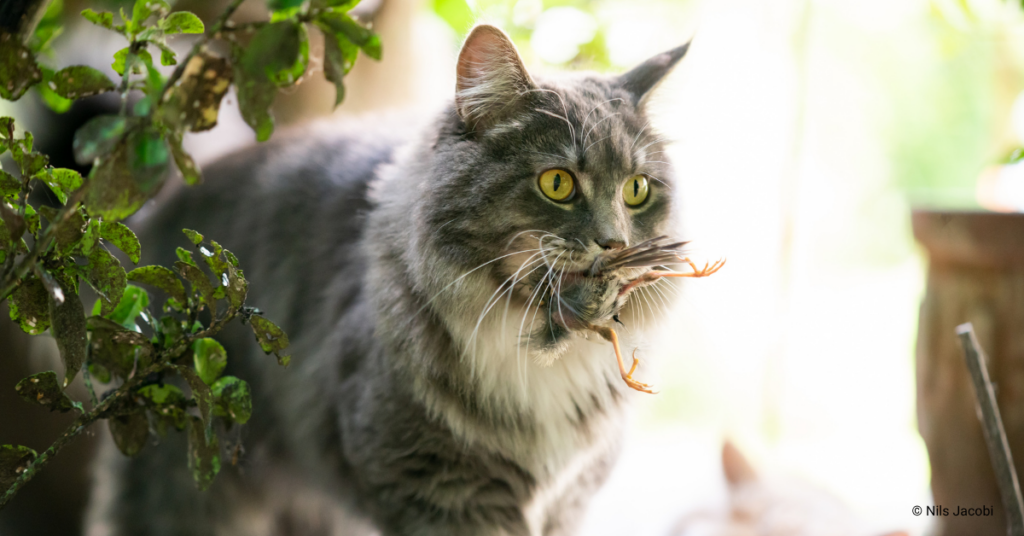
Ultimately, whether the number from the Smithsonian study is accurate or not, it’s clear that cats do prey on wildlife. Most cat owners who allow their pets outside have received the grim gift of a dead (or mostly dead) mouse or bird at some point. Perhaps the exact number of birds cats kill isn’t as important as the risks unsupervised time outdoors poses to our feline and feathered friends. The truth is, free-roaming cats face many needless dangers. These cats are far more likely to be hit by cars, attacked by other animals, consume poisons, or sustain injuries from falls or entrapment.
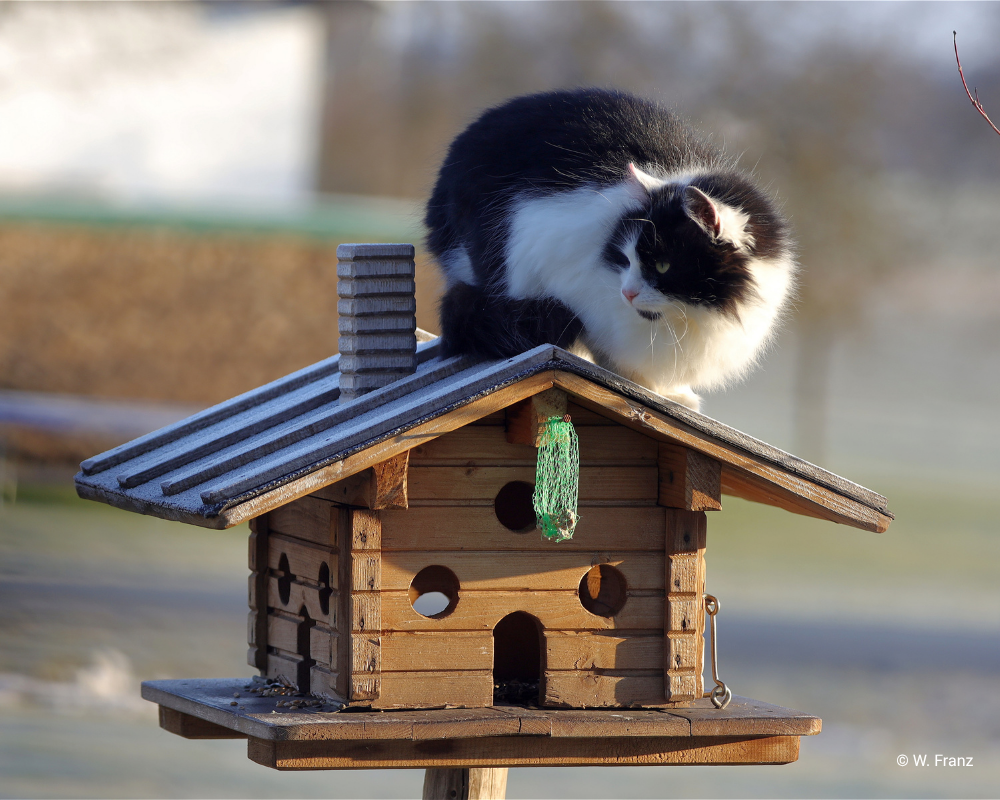
What’s more, preying on wildlife exposes cats to parasites, pathogens, and toxins that can harm or even kill them. Some of these infectious agents can be passed to other animals, including humans. Concerningly, cats are very susceptible to bird flu and can easily catch it from infected wildlife (AVMA: Avian Influenza A [H5N1] in Cats). While bird flu in humans is rare, the National Institutes of Health have expressed concern that this strain of influenza may become the source of the next global pandemic (Lycett, 2019).
The only way to ensure cats are safe from hazards found outdoors is to prevent them from going there in the first place. More and more cat owners are opting to keep their pets exclusively indoors, but can life inside a house truly meet the mental and physical needs of the typical cat? I asked our veterinarian, Dr. Nicole Loffgren, for her expert opinion.
The Veterinarian’s Take
Dr. Nicolle Lofgren, VMD, DACEPM, does not treat many cats as an exotic animal specialist. However, she does treat the victims of cats, including birds, rodents, and other small animals. “Unfortunately, the con of having cats outdoors is that they are absolutely destructive to native wildlife,” Dr. Lofgren told me, “and it’s not like pet cats are part of the normal ecosystem where it’s an eat to live kind of thing. It’s more like they kill an animal and then bring it to their owners as a gift, and that’s horrifying for everyone!”
When I asked if there are any pros to letting cats roam outdoors, Dr. Lofgren could only think of one. “Cats obviously enjoy time outdoors. They love sunlight. When my cat gets supervised time outside, he rubs himself on the warm concrete and chews on a mint plant we have nearby. He’s clearly enjoying himself.”
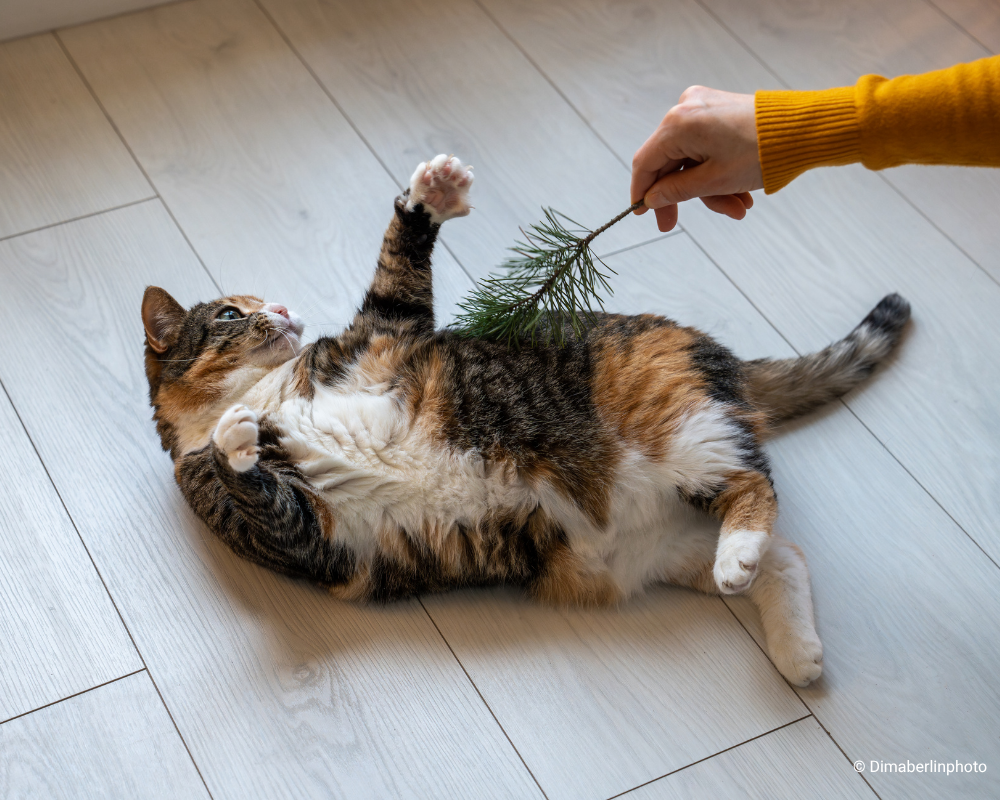
For many cat owners, unsupervised time outdoors provides enrichment for their pets, but Dr. Lofgren feels this isn’t a fair exchange considering the risks cats face outdoors. “Dog owners go into pet ownership with the understanding that the dog needs to be entertained, but we don’t really care that much about entertaining our cats.”
When house cats get bored or lack opportunities for socialization, it can result in undesirable behavior. “Sometimes our cats are going to do the thing they know gets a reaction out of us, like jump on the furniture or pee where they aren’t supposed to. Those behaviors are just them trying to reach out to get connection and interaction from us.”
Cat owners who are concerned about the mental and physical well-being of indoor-only cats can address many of those worries simply by providing enrichment. Dr. Lofgren suggests borrowing many of the tools we use for dogs. Rotate in different types of toys. Incorporate training with small treats. Use novel stimuli that incorporate multiple senses, such as scents and sounds. If cat owners dedicated the same amount of time to interacting with their cats as the typical dog owner spends walking their pooch each day, most cats will have their enrichment needs more than met.
“I do absolutely think that you can have a 100% indoor cat who is happy. You just have to make sure you make a commitment to giving them some of your time every day and don’t just think of them as the loner independent animal that doesn’t need human interaction.”
The Feral Cat Problem
In the “impact of free-ranging cats” article, the authors take pains to explain that the vast majority of bird deaths occur from unowned cats. They define these cats as “semi-feral cats that are sometimes considered pets (for example, farm/barn cats and strays that are fed by humans but not granted access to habitations), cats in subsidized colonies, and cats that are completely feral (that is, completely independent and rarely interacting with humans).” In other words, our pets aren’t causing the majority of the problem (Loss, 2013).
To get a better sense of how we tackle the problem of feral cats, I spoke with Michiko Berceau, Director of the Wildlife Center of Salt Lake, a local wildlife rehabilitation center. To start, I wanted to get a sense of the impact these cats have on the patients the center sees daily.
“I’m a very evidence and science-based individual,” Berceau told me. “So when I see statistics saying there are billions of birds killed by cats, I’m a little skeptical at first. But what I do know is that there are two human-wildlife conflict reasons that birds and mammals come into our center every year: window collisions and cat attacks. What that tells me is that maybe we don’t know if the predicted numbers of cat attacks on birds are 100% accurate, but when so many of the animals I see are coming in are cat-got, we need to take this issue seriously.”
I was curious how Berceau and her team could be sure the injuries they were seeing were caused by cats when no one saw the attack firsthand. She explained that even if direct evidence was lacking, indirect evidence is usually present. “We see a lot of puncture wounds in very specific places on birds. They are always under the armpits, or axilla, on both sides, which tells me the size of the attacking animal’s mouth was. Plus, cat-got birds are almost always missing part or all of their tail. Cats will grab the tail, and the bird will try to escape. Now that they are missing their tail, they don’t have the agility to escape, and the cat ends up getting them.”
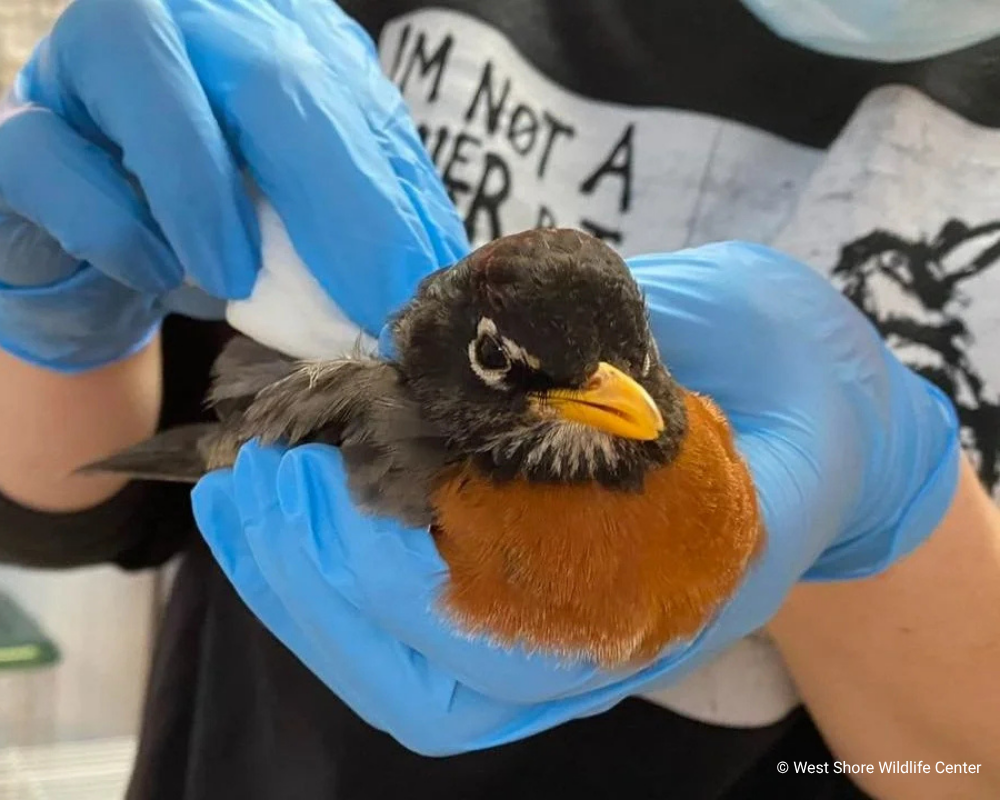
When I asked about the mortality rate of animals that come in with cat-caused injuries, Berceau told me, “It’s ridiculously high; usually between 60-90% of them die, even when given antibiotics. The high mortality rate is mostly due to the fact that puncture wounds from cats are more prone to infection and are harder to treat effectively because they are typically very deep.”
Knowing that most of these injured animals are attacked by unowned cats, I asked Berceau for her perspective on the feral cat problem.
“I think anyone that wants to help cat-attacked birds needs to invest in Trap, Neuter, Return (TNR) programs. TNR is when these cats are trapped, fixed [surgically sterilized through spay or neuter], marked in some way, usually by having the tip of their ear cut off, and then released back into the environment. I personally assist in caring for a feral cat colony. There used to be 17 cats in this colony, and now there’s only three, so TNR is clearly having an impact.”
When strictly managed, there is some evidence that TNR programs can reduce feral cat populations over time; however, in order to be effective, the sterilization rate needs to meet or exceed 70%, a feat that can be challenging because people often dump unwanted cats near feral colonies, increasing their numbers faster than volunteers can trap and sterilize the animals. In most cases where these programs resulted in sustained population declines in feral cats, adoption campaigns that placed large numbers of the cats with human owners were responsible for the bulk of the reduction. Unfortunately, most of the data we have on the efficacy of TNR is anecdotal, with few peer-reviewed studies conducted by researchers (Longcore, 2009).
When I asked Berceau if she felt these unowned cats really had a good quality of life, she gave a sobering answer. “Anyone that’s taken care of feral cat colonies knows that these animals do not have the best quality of life. It’s so frustrating when you see a cat that needs help because it’s suffering, and then it just disappears, and you never know what happened to that cat and you wonder how cruelly did it have to die because of the irresponsibility of humans? The truth is, if we had laws and regulations for cats that were as strict as the ones we have for dogs, feral cats would be far less common.”
Ultimately, both Dr. Lofgren and Berceau agree that caring for feral cats is the humane thing to do. “My personal opinion,” Dr. Lofgren said, “it is absolutely fine to help feral cats. In fact, if you provide them with food, they might have less drive to hunt wildlife.”
Regardless of how individuals feel about unowned cats, there is no doubt that they pose a significant threat to local wildlife, lead lives far more dangerous than their owned peers, and are difficult to manage well, even with human care. All animal-lovers can agree that the best life for a cat is one with a dedicated human caretaker.
Tips for Bird-loving Cat Owners
So, where does this leave the cat owner who loves wildlife? Both the experts I interviewed felt that keeping cats indoors 100% of the time is the gold standard. “Keep cats indoors. Keep them safe and make sure they aren’t going to harm wildlife or themselves,” Berceau said.
“A cat can get exposure to the sunlight, smells, and other outdoor stimuli from a screened-in window in a house in a way that is enriching but still completely safe,” Dr. Lofgren explained.
For owners who want to give their pets some outdoor time, supervision and safe barriers are key. Young cats can be leash-trained and explore the world safely with a human companion. Other owners invest in a “catio” or outdoor enclosure that allows cats to be outside while limiting their access to wildlife.
For cat owners who find themselves with escape artists who are impossible to keep indoors, there are some things that can reduce the impact of free-roaming cats on wildlife. A 2021 study found that cats whose owners spent 5-10 minutes playing with them using toys like feather wands had a 25% reduction in the number of prey animals brought home (Cecchetti, 2021). Another study from 2015 found that cats wearing special bird-safe collars killed 19 times fewer birds than cats without the collars (Willson, 2015). It should be noted that these collars don’t help prevent mammal deaths, and even with the collars as an early warning, fledgling birds are often unable to escape a cat.
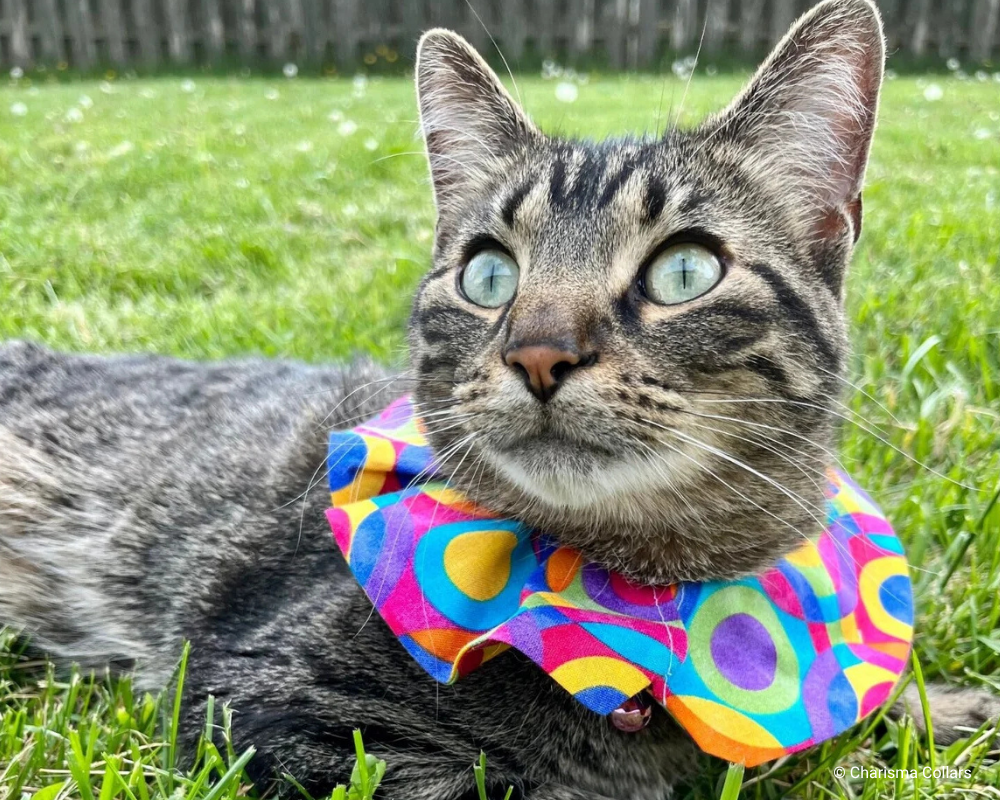
Perhaps the most important thing to remember in the debate between cats and birds is that people on both sides are animal lovers. It’s easy to become entrenched in one side of the debate or another, but the only way to move towards a meaningful solution for everyone is to start from the common ground of compassion for other species. As humans, perhaps our greatest quality is our ability to help animals other than ourselves. If we act with compassion for birds, cats, and each other, we’re far more likely to have an impact.
This blog is the first entry in our Conservation Connections series exploring real-world actions anyone can take to have meaningful impacts on bird conservation in their local shared ecosystem. We’re focusing on actions individuals have direct control over, are low or no-cost, and don’t require large investments of time, resources, or effort. If you have ideas for meaningful conservation actions we should promote in the series, let us know at education@hawkwatch.org.
This blog was written by Melissa Halvorsen, HWI’s Education and Outreach Director. You can learn more about Melissa here.