Which animal should you worry most about getting into a collision with? Before I began working at HawkWatch International, my answer would have been a quick one: deer! Spending so much time in northern Minnesota in my teens and early 20s, we would watch out for deer anytime we drove through rural or forested areas, especially at night. And, after moving to Utah, it was the same story … or, rather, many stories. After all, who hasn’t been involved in a collision with deer, or knows someone who has?
Vehicle Collisions
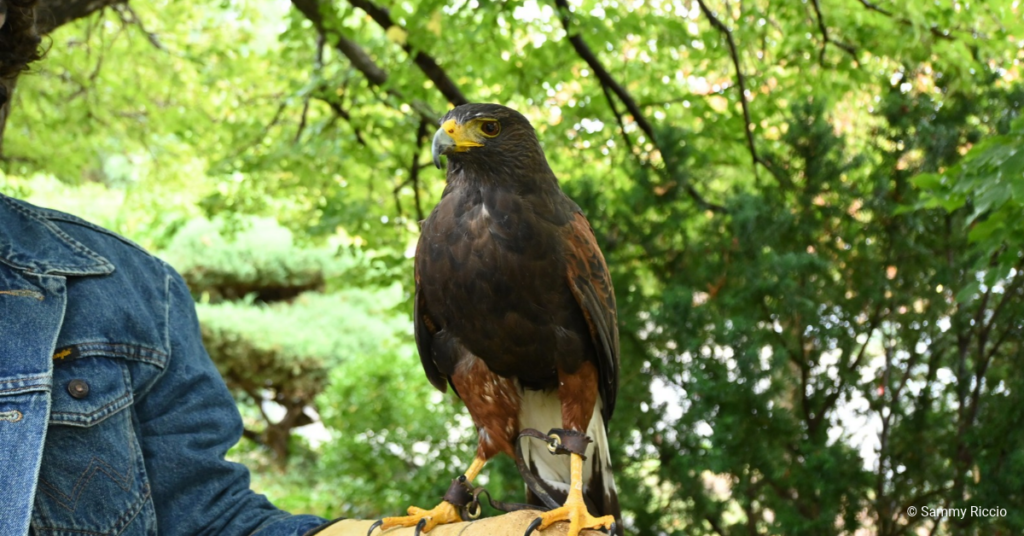
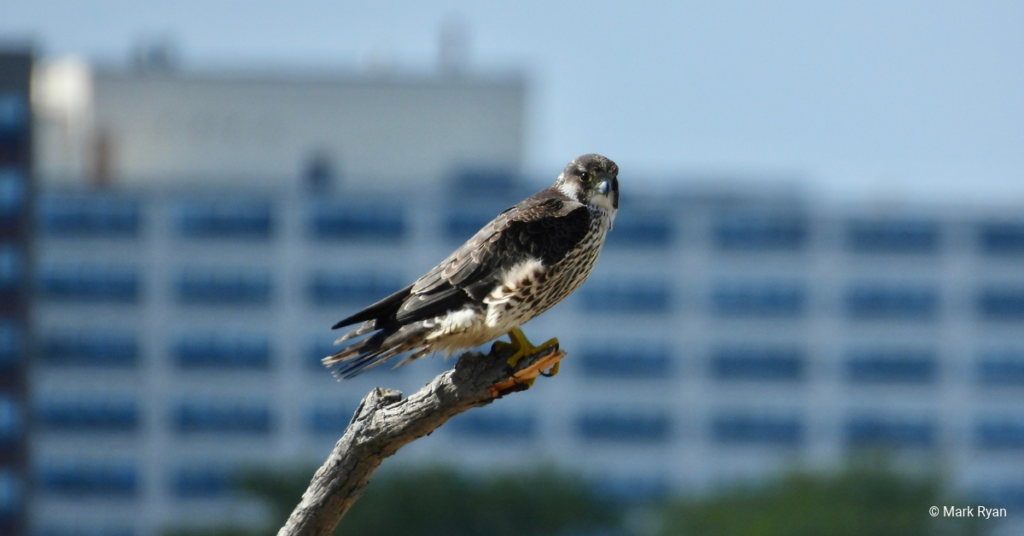
Birds, including raptors, are also at risk for collisions with cars. At HawkWatch International, several Raptor Ambassadors are with us because of various collisions. Even though we are lucky to have birds who survived those collisions and are healthy enough to have a good quality of life with us, unfortunately that is not the case in most car-on-bird collisions. In fact, anywhere from 89 million to 340 million birds die every year in vehicle collisions on U.S. roads, according to 2014 research published in the Journal of Wildlife Management.
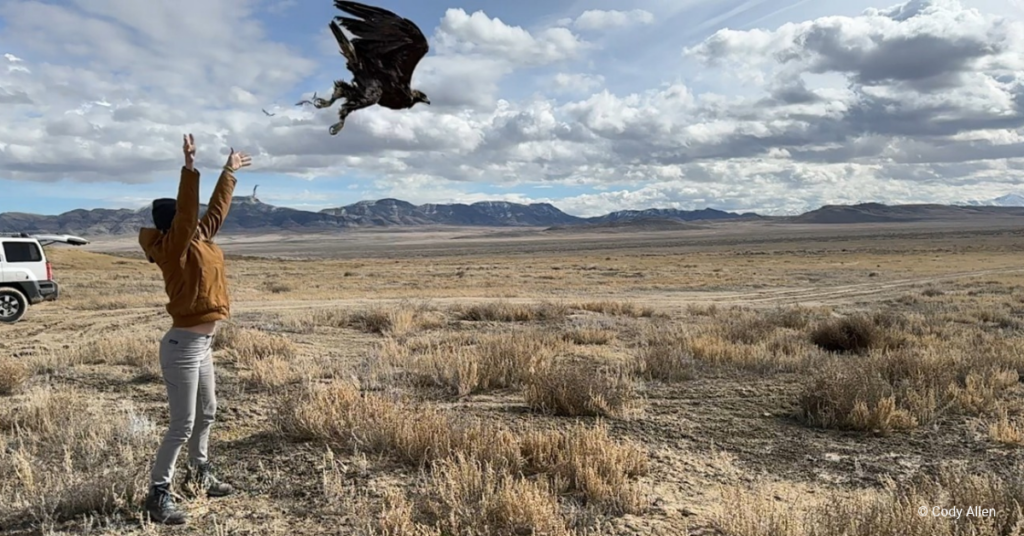
Raptors are no exception in these accidents. Many species, including Golden Eagles, scavenge on roadkill, like deer. If those eagles have had a full meal, it’s difficult for them to take off quickly or gain height with the added weight. As a result, they may react when a car approaches but not move away quickly enough. They might be at the height of the car, resulting in a crash. This is likely what happened to our Golden Eagle, Chrys.
But it isn’t just roadkill that attracts birds to busy roadsides. Some raptors hunt living animals near roads. Trash and food scraps lying around draw in hungry or curious critters, like rodents, bringing them close to or directly on roadways. Raptors, such as hawks and owls, then hunt those critters. They may be so focused on the hunt that they don’t get enough warning to avoid cars, or cars could simply be driving too fast to give them enough time to get out of the way. This may well be what caused our Swainson’s Hawk, Aurora, or our Western Screech-Owl, Artemis, to get hit by cars.
How to Prevent Vehicle Collisions
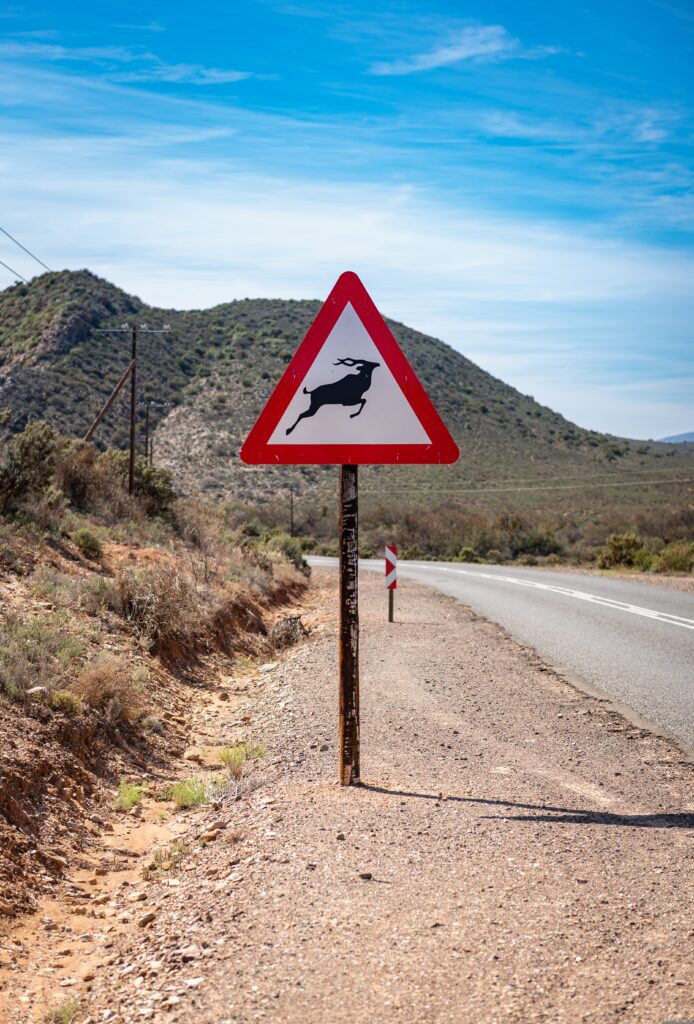
The most basic answer is to drive slowly. Following posted speed limits and keeping an eye out for wildlife while driving is the simplest way to avoid hitting anyone. Avoid driving at dawn and dusk, when most collisions occur. These are tough asks, especially on long road trips, but it can help keep you and your passengers safer while also protecting raptors and other wildlife.
The second simple thing you can do is to keep food scraps or items that might attract animals in your car until you can throw them away in a trash can. Don’t throw anything out of your car windows or litter it on the side of the road, as it can attract insects, rodents, or other potential raptor prey.
Finally, you can report roadkill. If you spot a dead deer, raccoon, cat, or any creature on the road, report it to your local department of transportation for them to relocate it. If you are in Utah, the Utah Roadkill Reporter app makes it easy to report roadkill to the Utah Department of Transportation and Utah Division of Wildlife Resources. Plus, you’re contributing to direct conservation, as our team uses data from this app as part of our Eagle Vehicle Strike program. The app helps us find roadkill hotspots, so we know where to relocate carcasses to eagle-safe distances, keeping scavenging birds safe and well fed in the lean winter months.
Window Collisions
Another extremely common cause of bird crashes is window collisions, with the U.S. Fish and Wildlife Service estimating that over one billion birds die from window collisions every year! If you’ve ever accidentally run into a window or door, you know the feeling. And birds do not see windows and glass the same way we do, so it’s a much bigger issue for them. Rather, they see open space or, in the reflection, more of whatever habitat they are in.
How to Prevent Window Collisions
Fortunately, this is an easy and potentially fun fix: You can decorate your windows to help birds see the glass.
The first decorative option is to paint a grid on your window. This is an activity you can do with the whole family. If you use tempera paint, it’s easy to wash off, so mistakes are no big deal. Be as creative as you want (a new grid design for every holiday, perhaps), with a few caveats:
- Light colors are better for bird visibility than dark colors.
- Each grid line should be at least a quarter inch wide to ensure birds can spot it.
- The spaces between grid lines should be no more than two inches wide (or two inches high) to protect even the smallest hummingbirds.
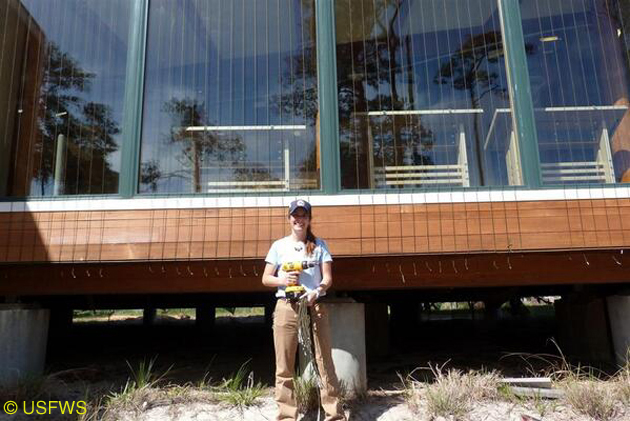
Another option is to hang paracord curtains. This nylon cord is relatively inexpensive and comes in just about any color you can think of. You can hang pieces of it, spaced 4 inches or less apart, from the top of the window to the bottom. Because it’s 3D, as opposed to paint, it does not need to be as tightly spaced as a painted grid. A Wilson Journal of Ornithology study found that 10-centimeter spacing (a smidge under four inches) reduced Ruby-Throated Hummingbird collisions to zero!
A third option is to add screens or netting to your windows, which reduces reflections and helps birds notice something in their path. The gaps in the screen should be no more than half an inch wide to prevent birds from getting stuck in them. Besides preventing bird collisions, screens offer the bonus of keeping bugs out of your home.
Raptors face many threats out there. While some are large, ecosystem-wide problems, others are much more solvable. Driving with care and making your windows bird-safe will help raptors, other birds, and all wildlife live more safely in our shared environment.
This blog was written by one of HWI’s Educators, Chris Butler. You can learn about Chris here.