On Thursday, November 19, 2026, we said goodbye to Artemis, our Western Screech-Owl. We estimate that Artemis was around 16 years old when she passed–a long, well-lived life for the species. Artemis was diagnosed with acute liver failure, so we made the difficult choice to euthanize her rather than prolong her suffering.
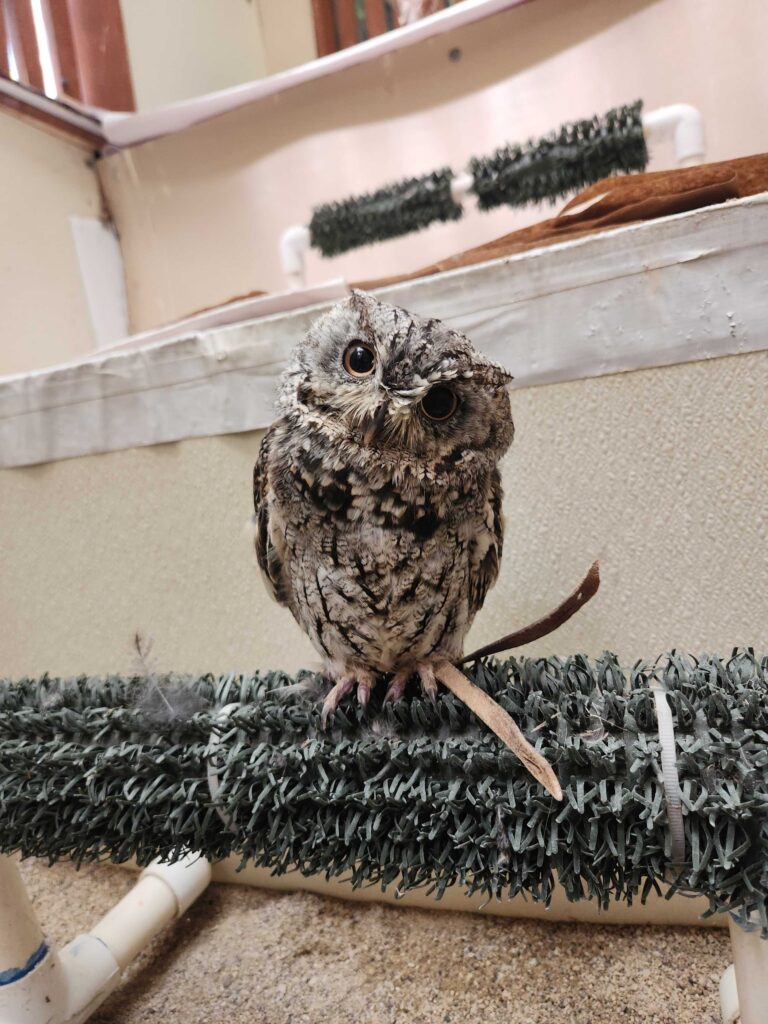
Artemis joined the HawkWatch International team as a Raptor Ambassador in 2014 after she was struck by a car. Although she received excellent care while at the Wildlife Rehabilitation Center of Northern Utah and retained the ability to fly, the accident left Artemis blind in one eye. This injury impaired her vision enough that the rehabilitation team felt hunting would be too difficult for her, and she should remain in human care. After a veterinarian confirmed that Artemis was non-releasable, she transitioned into her second act as an educator on behalf of her species.
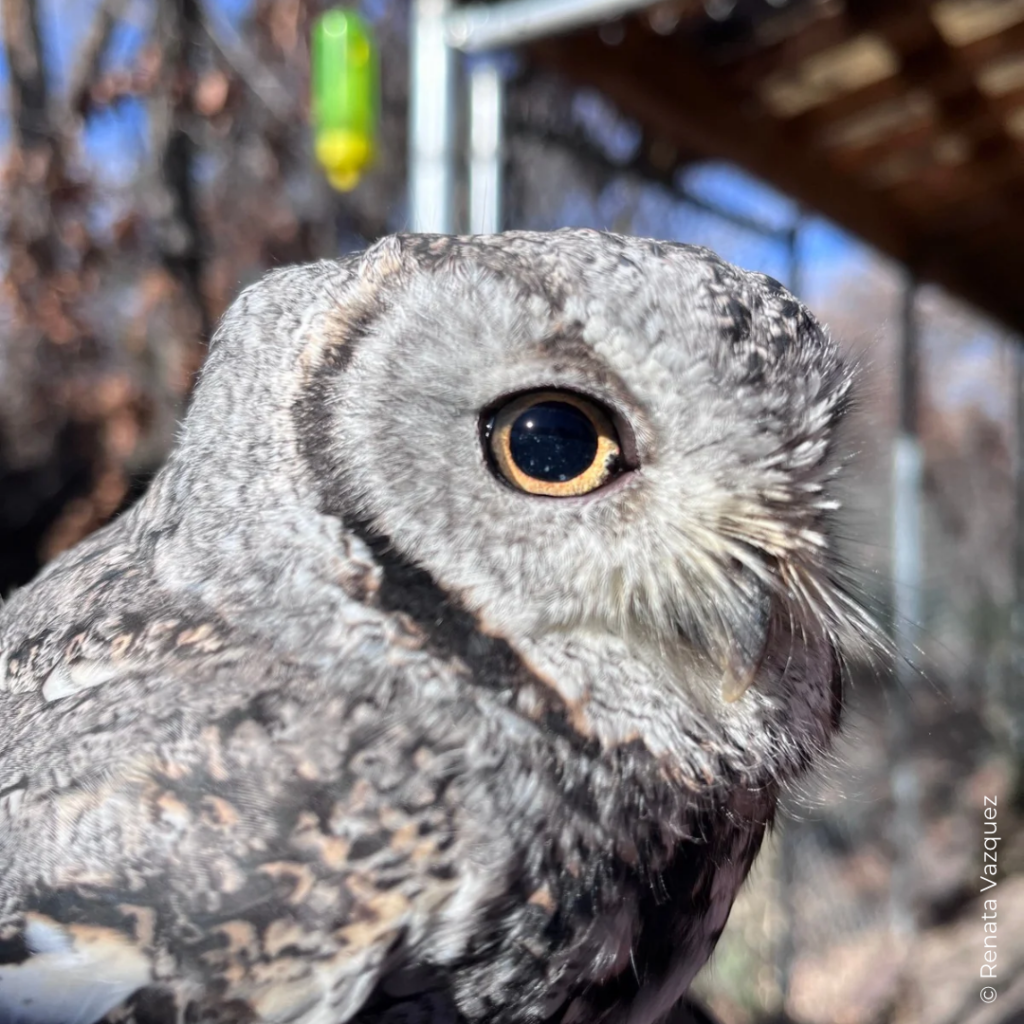
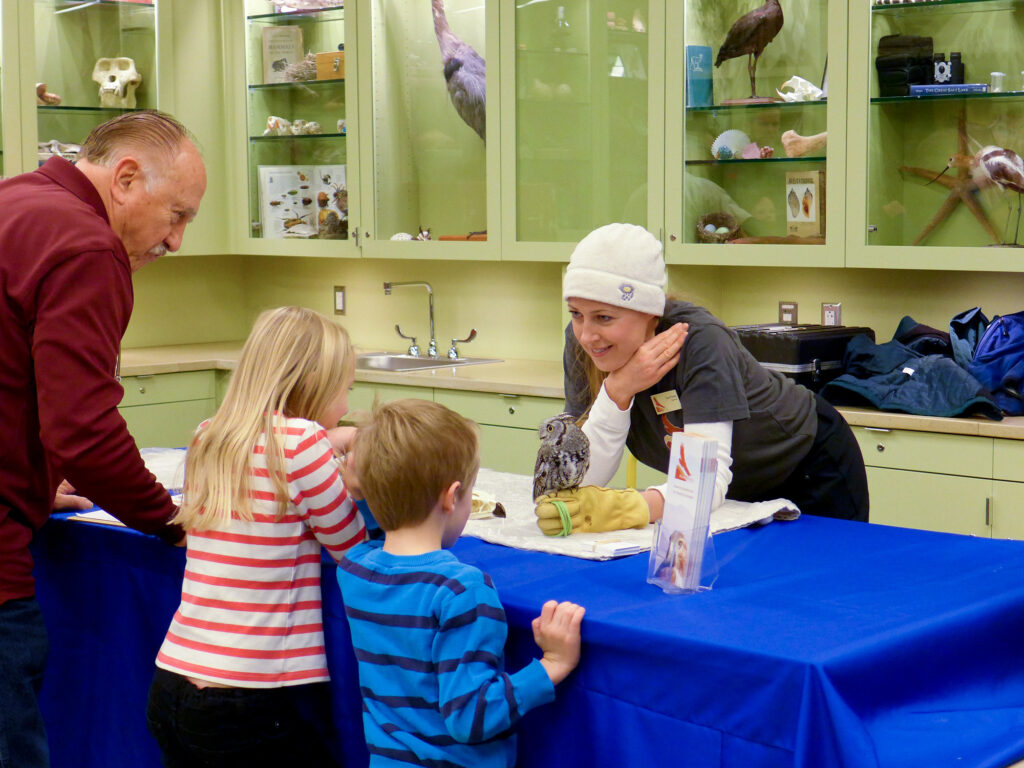
Over the last 12 years, Artemis reached more than 100,000 learners through over 1,000 programs. For many people, she was the first owl they ever saw in person. Doing a program with Artemis was always so fun because of the inevitable sounds of delight that came from the audience when we first brought her out of her box. Many learners didn’t realize that raptors came in such small, adorable packages until they met Artemis. Without fail, someone always asked, “Is she a baby?!” This gave us the perfect opportunity to educate people about the fact that raptors come in many sizes, and a lot of them share our spaces without us realizing they are near.
“Artemis was one of the first birds I welcomed into HawkWatch International after I became Education Director,” said Nikki Wayment, Executive Director. “She joined us at a pivotal point in our history when we expanded our education program statewide and started the Cavity Adopting Raptor Ecology Studies (CARES) program.”
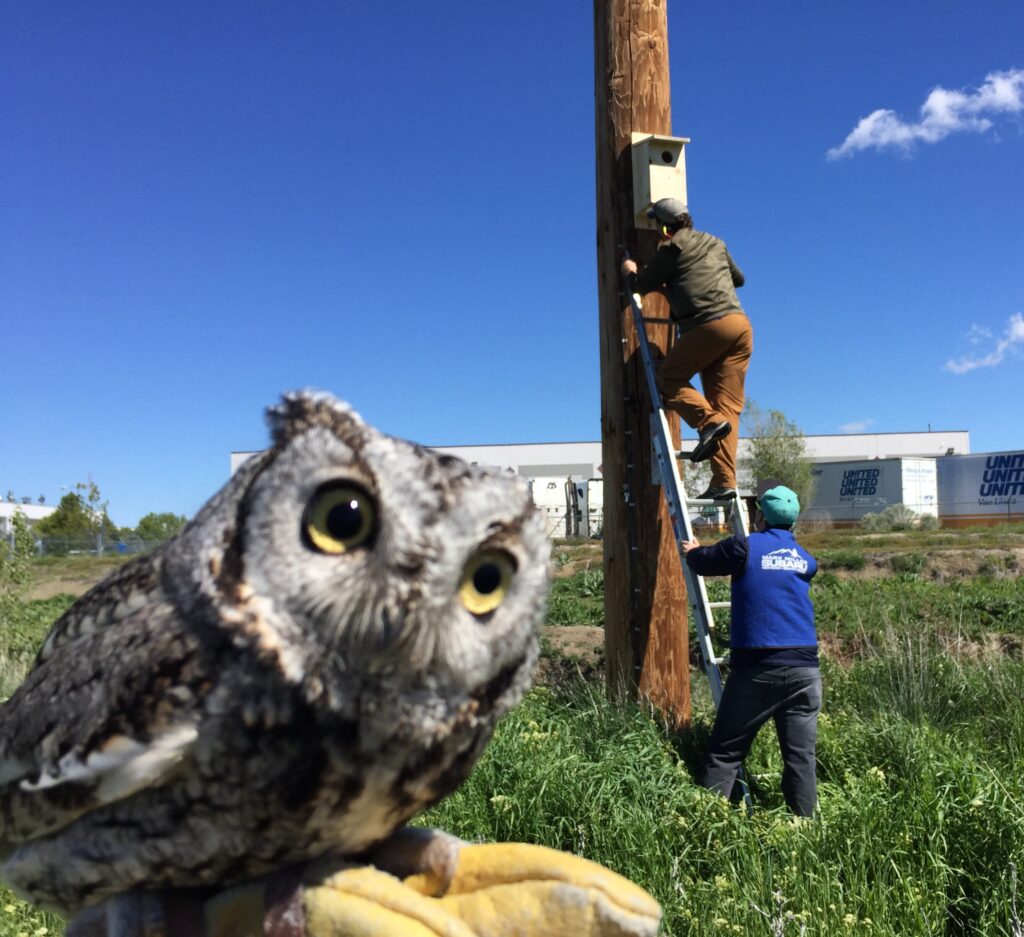
Artemis was an especially good ambassador for this research, which focuses on better understanding the survival and reproductive success of cavity-nesting species, like Western Screech-Owls and American Kestrels. By studying their nesting ecology, movement, and the threats they face, we hope to fill critical knowledge gaps and reverse declines in population levels.
“She just had this aura that would soften people around their edges, making it impossible for them not to care about conserving the species,” said Educator Call Vande Veegaete.
Despite her sweet face and small stature (she weighed just 160 grams or about ⅓ of a pound), Artemis packed a lot of personality and spunk. She was not intimidated by the big humans who cared for her, and made her wants and wishes known freely.
She especially loved the bird care docents who tended to her needs daily, including regular spa days complete with pedicures, warm baths, and specially decorated cavities (read cardboard boxes) for lounging. Thanks to this excellent care, she lived much longer than most wild members of her species.
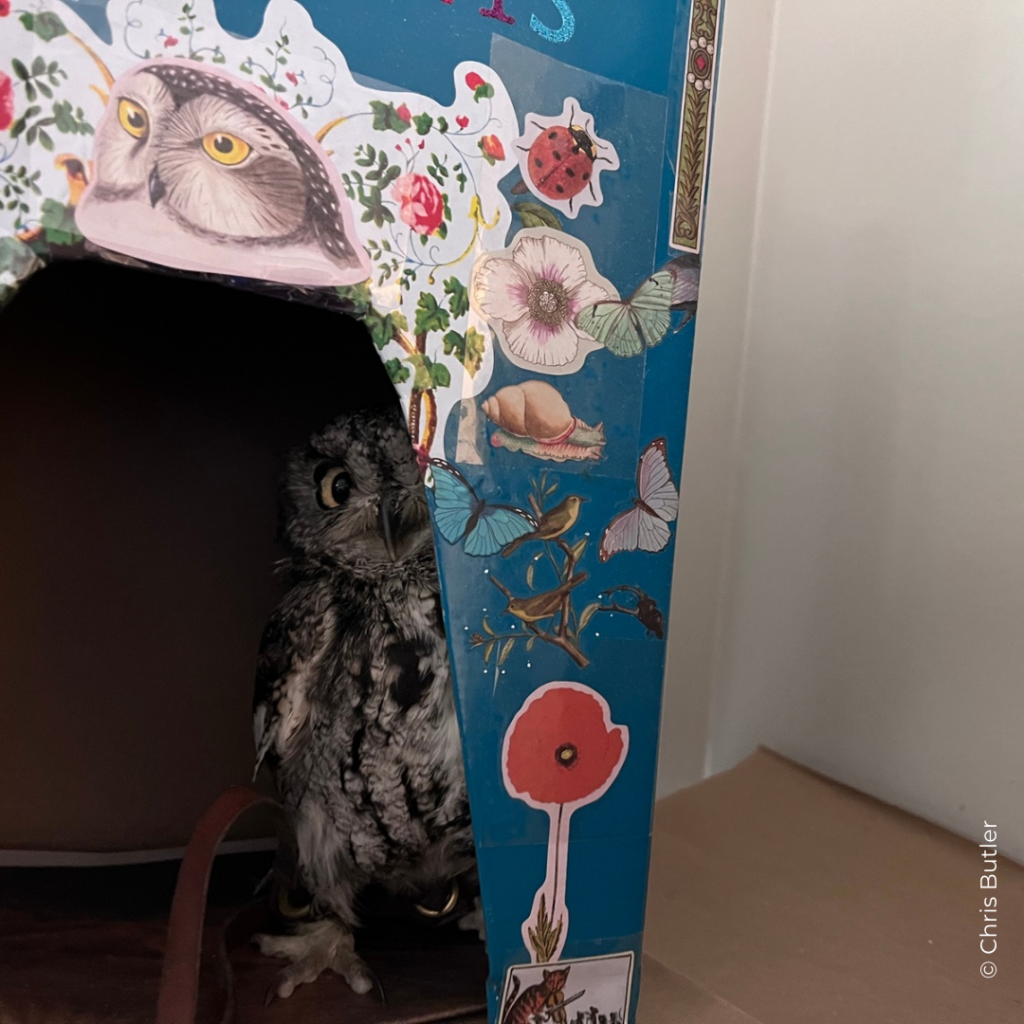
Artemis relaxing in her beautifully decorated cardboard box.
Perhaps Artemis’s biggest contribution to our work was in her role as a trainer of human handlers. Artemis was the first bird many of our education docents held on the glove. Artemis was very good at establishing boundaries in a non-threatening way, helping new handlers recognize and interpret bird body language. Working with her helped our docents build confidence in their skills and prepared them to move on to larger, more intimidating birds. Even after learning to handle the bigger species that some learners perceive as “cooler,” many of our docents claimed Artemis as their personal favorite, and there was never a lack of docents signed up to work on programs with her.
Little Artemis has left an eagle-sized hole in our hearts that can never be filled. We will honor her memory by continuing to work toward HawkWatch International’s mission to conserve the environment we share with raptor species like hers.
If you had the opportunity to meet Artemis, we’d love to hear your memories. You can share your stories and photos with us at hwi@hawkwatch.org.
This blog was written by Melissa Halvorsen, our Education & Outreach Director, with support from Kirsten Elliott, our Development & Communications Director. You can learn more about Melissa and Kirsten on their staff profile pages.